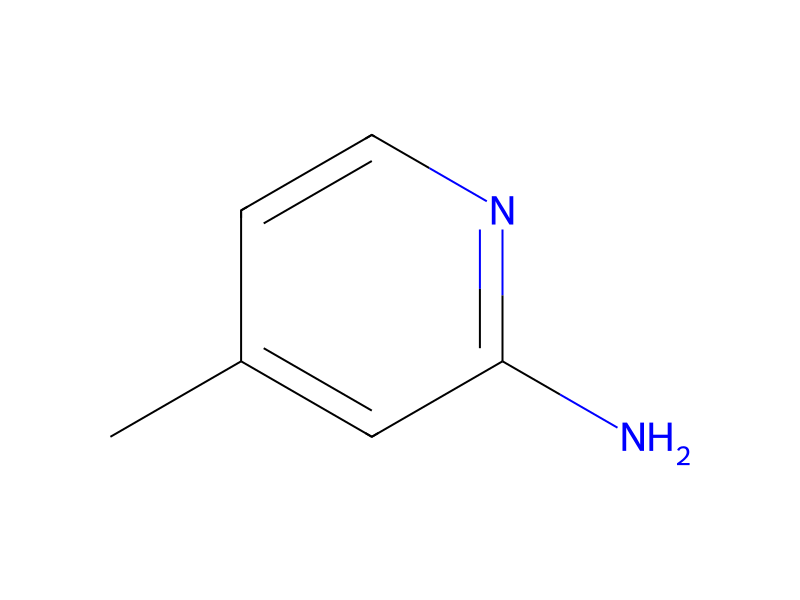
2-Amino-4-methylpyridine → Methyl 5-chloro-1-(2-ethoxyethyl)-7-(4-methylpyridin-2-yl-amino)-1h-pyrazolo[4,3-d]pyrimidine-3-carboxylate
HRID 1516296
Reaktionsgleichung

[Cl:1][C:2]1[N:3]=[C:4](Cl)[C:5]2[N:10]([CH2:11][CH2:12][O:13][CH2:14][CH3:15])[N:9]=[C:8]([C:16]([O:18][CH3:19])=[O:17])[C:6]=2[N:7]=1.[NH2:21][C:22]1[CH:27]=[C:26]([CH3:28])[CH:25]=[CH:24][N:23]=1>CS(C)=O>[Cl:1][C:2]1[N:3]=[C:4]([NH:21][C:22]2[CH:27]=[C:26]([CH3:28])[CH:25]=[CH:24][N:23]=2)[C:5]2[N:10]([CH2:11][CH2:12][O:13][CH2:14][CH3:15])[N:9]=[C:8]([C:16]([O:18][CH3:19])=[O:17])[C:6]=2[N:7]=1Komponenten
4
Edukt 2

Produkt 1

Reagenzien, Katalysatoren, Lösungsmittel 1

Versuchsvorschrift
The dichloro compound of Step 6 (1.98 g, 6.20 mmol) was dissolved in dimethyl sulphoxide (10 mL) and the solution treated with 2-amino-4-methylpyridine (1.34 g, 12.4 mmol). The reaction mixture was stirred at room temperature for 18 hours. The reaction mixture was partitioned between dichloromethane (300 mL) and water (500 mL) and the dichloromethane layer separated. The organic phase was washed with water (3×100 mL), dried over magnesium sulphate and concentrated in vacuo. The residue was purified by column chromatography on silica gel eluting with dichloromethane:methanol 100:0 to 98:2. The crude product was triturated with ether (50 mL), filtered and concentrated in vacuo to yield the title product, 1.2 g.