StartseiteMCPWorkbenchSkills
StartseiteWorkbenchBenachrichtigungenMein Bereich
llms.txt · MCP-AnleitungDatenschutz · Nutzungsbedingungen · Supportv1.8.3
  1. Startseite
  2. /Reaktion

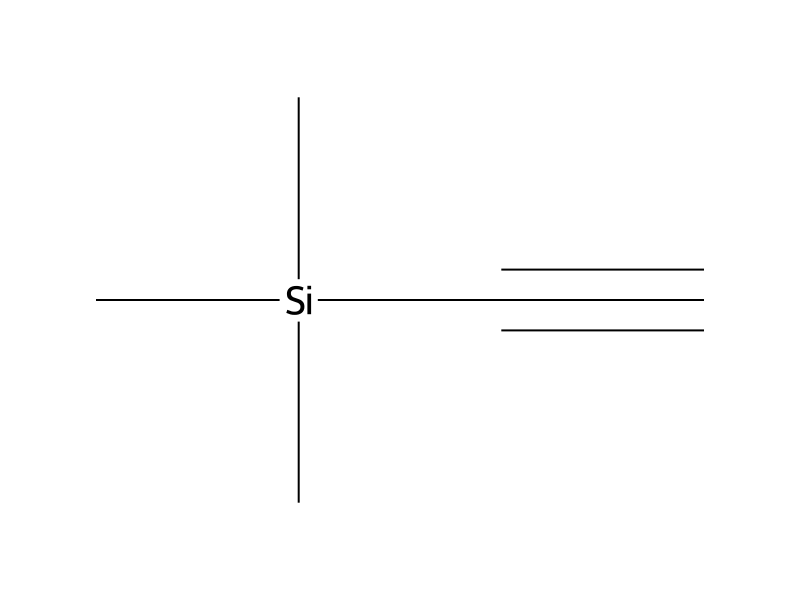
Trimethylsilylacetylene → 2-(4-Trimethylsilylethynylphenyl)pyridine

HRID 1522713
Drucken

Reaktionsgleichung

Reaktionsgleichung von HRID 1522713
[CH3:1][Si:2]([C:5]#[CH:6])([CH3:4])[CH3:3].I[C:8]1[CH:13]=[CH:12][C:11]([C:14]2[CH:19]=[CH:18][CH:17]=[CH:16][N:15]=2)=[CH:10][CH:9]=1>C(N(CC)CC)C.C1C=CC([P]([Pd]([P](C2C=CC=CC=2)(C2C=CC=CC=2)C2C=CC=CC=2)([P](C2C=CC=CC=2)(C2C=CC=CC=2)C2C=CC=CC=2)[P](C2C=CC=CC=2)(C2C=CC=CC=2)C2C=CC=CC=2)(C2C=CC=CC=2)C2C=CC=CC=2)=CC=1.[Cu]I>[CH3:1][Si:2]([C:5]#[C:6][C:8]1[CH:9]=[CH:10][C:11]([C:14]2[CH:19]=[CH:18][CH:17]=[CH:16][N:15]=2)=[CH:12][CH:13]=1)([CH3:4])[CH3:3]
KomponentenVersuchsvorschriftAufarbeitungQuellen und NachweiseNotizen zur Reaktion

Komponenten

6

Edukt 2

HCID 66111TrimethylsilylacetyleneHCID 692379072-(4-Iodophenyl)pyridine

Produkt 1

HCID 692372572-(4-Trimethylsilylethynylphenyl)pyridineAusbeute 72 %

Reagenzien, Katalysatoren, Lösungsmittel 3

HCID 24350Copper(1+) iodide; Copper(I) iodide; Cuprous iodide; Cuprous iodide (CuI)Katalysator
HCID 178418397
HCID 178418397, Verbindung
Katalysator
HCID 8471TriethylamineLösungsmittel

Versuchsvorschrift

Trimethylsilylacetylene (4.1 mL, 28.8 mmol) and tetrakis(triphenylphosphine)palladium (0) (832 mg, 0.72 mmol) were added to a suspension of (1) (4.06 g, 14.4 mmol) and copper (I) iodide (274 mg, 1.44 mmol) in triethylamine (120 mL) that had been deoxygenated with argon. The mixture was deoxygenated with argon and then stirred under argon at room temperature for 40 hours. Aqueous hydrochloric acid (3 M, 320 mL) and dichloromethane (250 mL) were added. The organic layer was separated and the aqueous layer was extracted with dichloromethane (3×50 mL). The combined organic layers were washed with aqueous hydrochloric acid (3 M, 30 mL), water (250 mL), brine (250 mL), dried over anhydrous magnesium sulfate, filtered and then the solvent was completely removed. The residue was purified by column chromatography over silica using a dichloromethane/light petroleum mixture (1:4) as the eluent. The main band was isolated and the solvent completely removed to give (2) (2.59 g, 72%).

Aufarbeitung

  1. customhad been deoxygenated with argon
  2. customThe mixture was deoxygenated with argon
  3. additionAqueous hydrochloric acid (3 M, 320 mL) and dichloromethane (250 mL) were added
  4. customThe organic layer was separated
  5. extractionthe aqueous layer was extracted with dichloromethane (3×50 mL)
  6. washThe combined organic layers were washed with aqueous hydrochloric acid (3 M, 30 mL), water (250 mL), brine (250 mL)
  7. dry with materialdried over anhydrous magnesium sulfate
  8. filtrationfiltered
  9. customthe solvent was completely removed
  10. customThe residue was purified by column chromatography over silica using a dichloromethane/light petroleum mixture (1:4) as the eluent
  11. customThe main band was isolated
  12. customthe solvent completely removed

Quellen und Nachweise

ORD-Eintrag
ord-1fbf2dd3245e487599b5e80e6bca2a02
Quelldatensatz
uspto-grants-2015_07
DOI
10.6084/m9.figshare.5104873.v1
Patentnummer
US09078330B2

Notizen zur Reaktion

Auf dieser SeiteKomponentenVersuchsvorschriftAufarbeitungQuellen und NachweiseNotizen zur Reaktion