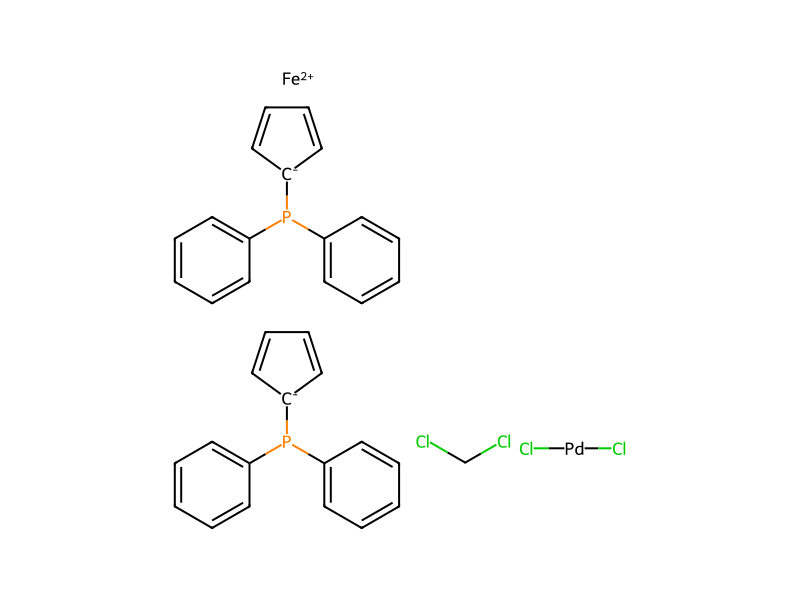
CC1(C)C(C)(C)OB([C:9]2[CH2:14][CH2:13][CH2:12][C:11](=[O:15])[CH:10]=2)O1.Cl[C:18]1[CH:23]=[CH:22][N:21]=[CH:20][C:19]=1[N+:24]([O-:26])=[O:25]>O1CCOCC1.C([O-])([O-])=O.[Na+].[Na+].CCOC(C)=O.C1C=CC(P(C2C=CC=CC=2)[C-]2C=CC=C2)=CC=1.C1C=CC(P(C2C=CC=CC=2)[C-]2C=CC=C2)=CC=1.Cl[Pd]Cl.[Fe+2].C(Cl)Cl>[N+:24]([C:19]1[CH:20]=[N:21][CH:22]=[CH:23][C:18]=1[C:9]1[CH2:14][CH2:13][CH2:12][C:11](=[O:15])[CH:10]=1)([O-:26])=[O:25]To a solution of 3-(4,4,5,5-tetramethyl-1,3,2-dioxaborolan-2-yl)cyclohex-2-enone (1.0 equiv.) in degassed dioxane and 2M Na2CO3 was added 4-chloro-3-nitropyridine (1.2 equiv.) and Pd(dppf)Cl2-DCM (0.05 equiv.). The reaction was heated in an oil bath to 110° C. for 2 hours. Cooled to room temperature, then diluted with EtOAc, added H2O— dark solution, lots of emulsions. Filtered to get rid of the solids, then extracted the organic phase, dried with Na2SO4, and concentrated. The crude was purified via silica gel chromatography eluting with ethyl acetate and hexanes (1:1) to yield 3-(3-nitropyridin-4-yl)cyclohex-2-enone (55%, 2 steps). LC/MS=219 (M+H), LC=2.294 min.