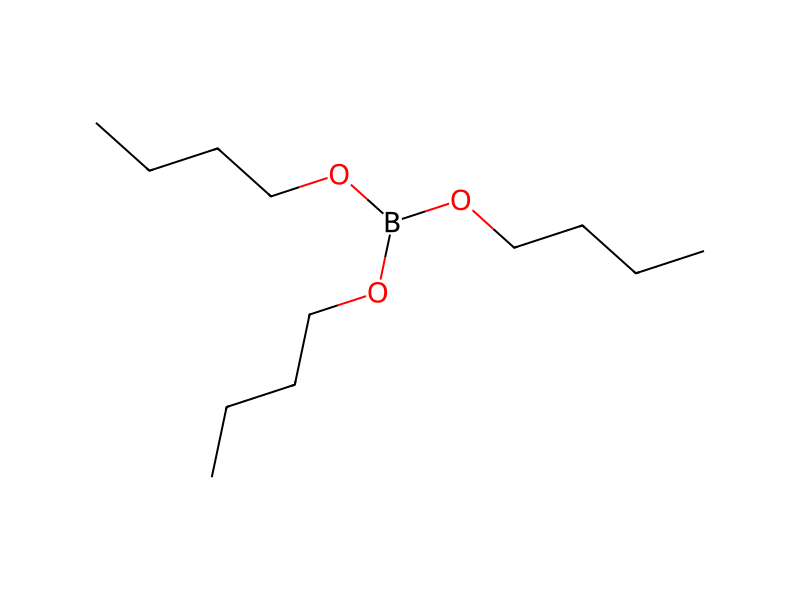
First, 8.20 g (115 mmol) of crotonaldehyde and 9.55 g (57.2 mmol) of benzenesulfonyl cyanide were introduced to the same reaction vessel as in Example 1. Toluene (15 ml) was added as the solvent, and 1.33 g (5.78 mmol) of tributyl borate was added. Then the mixture was heated under reflux for 3 hours while agitating at an internal temperature of 110° C. in a nitrogen atmosphere, separating and removing water that was produced. After this solution was cooled to room temperature, the low-boiling components, such as solvent, etc., were removed under reduced pressure and the resulting concentrate was cooled in an ice bath to precipitate crystals. The crystals were filtered with a glass filter and washed with 10 ml of toluene that had been cooled to 5° C. or lower. Then the crystals were dried for 2 hours in vacuo to give 10.9 g of 2-benzenesulfonylpyridine as colorless crystals (purity of 98%, yield of 85% based on benzenesulfonyl cyanide).