Diethylamine → N,N,N',N'-tetraethyl-9-oxofluorene-2,7-dicarboxamide
HRID 1576966
Reaktionsgleichung

[O:1]=[C:2]1[C:14]2[CH:13]=[C:12]([C:15](Cl)=[O:16])[CH:11]=[CH:10][C:9]=2[C:8]2[C:3]1=[CH:4][C:5]([C:18](Cl)=[O:19])=[CH:6][CH:7]=2.[CH2:21]([NH:23][CH2:24][CH3:25])[CH3:22]>C(Cl)(Cl)Cl>[CH2:21]([N:23]([CH2:24][CH3:25])[C:18]([C:5]1[CH:6]=[CH:7][C:8]2[C:9]3[C:14](=[CH:13][C:12]([C:15]([N:23]([CH2:24][CH3:25])[CH2:21][CH3:22])=[O:16])=[CH:11][CH:10]=3)[C:2](=[O:1])[C:3]=2[CH:4]=1)=[O:19])[CH3:22]Komponenten
4
Edukt 2
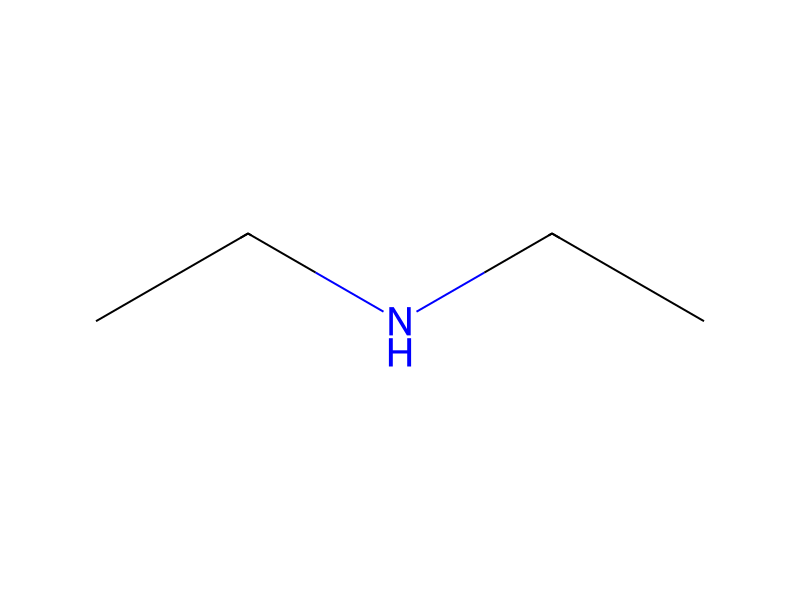

Produkt 1

Reagenzien, Katalysatoren, Lösungsmittel 1

Versuchsvorschrift
To a solution of 61.0 g (0.2 mole) of 9-oxofluorene-2,7-dicarbonyl chloride dissolved in 600 ml of chloroform(hydrocarbon stabilized and stored over molecular sieves) is added 58.4 g (0.8 mole) of diethylamine in small increments. The solution is refluxed with stirring for an additional 4 hours, cooled, washed 3 times with water, dried over anhydrous sodium sulfate, filtered, and the volatile materials removed on a steam bath under vacuum. The resulting oil so obtained is triturated with pentane to effect solidification. The residue when recrystallized three times from ethyl acetate yields N,N,N',N'-tetraethyl-9-oxofluorene-2,7-dicarboxamide, m.p. of 142°-3°C, λmaxMeOH 265, and E 1cm1% 2011.