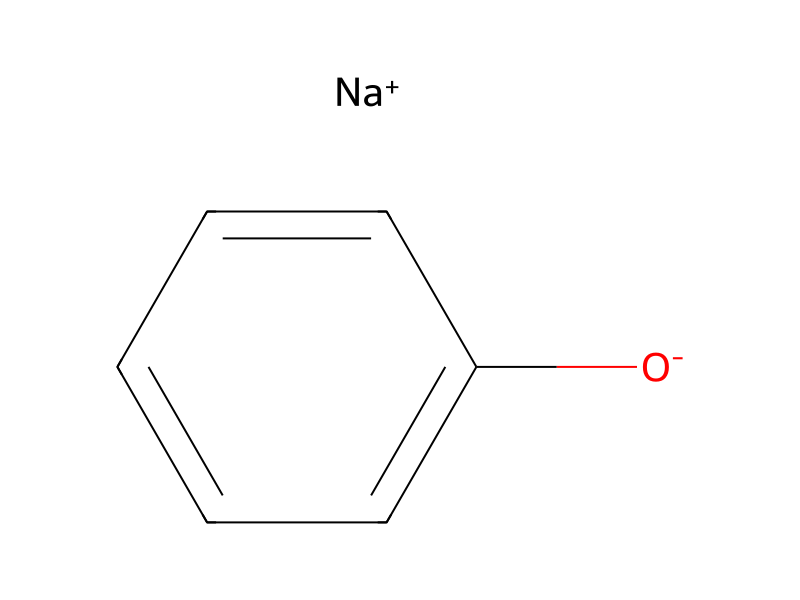
Sodium phenoxide, 9.0 g. (0.078 mole) is added in portions to a solution of 20 g. (0.076 mole) of 4-ethoxycarbonyloxybenzenesulfonyl chloride in 250 ml. of dry benzene. The slurry is brought to reflux (80° C.) for 1.5 hours and then allowed to stir at room temperature overnight. The reaction is followed by thin layer chromatography, additional sodium phenoxide is added as needed, and the reaction is refluxed until complete. The slurry is then cooled to room temperature and filtered to remove sodium chloride. The filtrate is concentrated to give 22.3 g. (88%) of the desired benzene sulfonate as an oil of suitable purity for the next reaction. The 4-ethoxycarbonyloxybenzene sulfonate (22.3 g., 0.069 mole) is taken up in 120 ml. of ethanol and stirred at 20° C. while a solution of 5.3 g. (0.08 mole) of potassium hydroxide in 50 ml. of ethanol is added dropwise. After two hours at room temperature, the solution is brought to 40° C. for 30 minutes and then concentrated in vacuo. The residue is taken up in 250 ml. of water (pH=10), extracted once with ether, acidified to pH 1 with 10 ml. of concentrated hydrochloric acid and then extracted three times with 200 ml. portions of chloroform. The chloroform extracts are combined, dried over sodium sulfate and concentrated in vacuo to give 15.9 g. (91%) of the phenol as an oil which crystallizes on standing; m.p.=114°-116.5° after recrystallization from xylene.