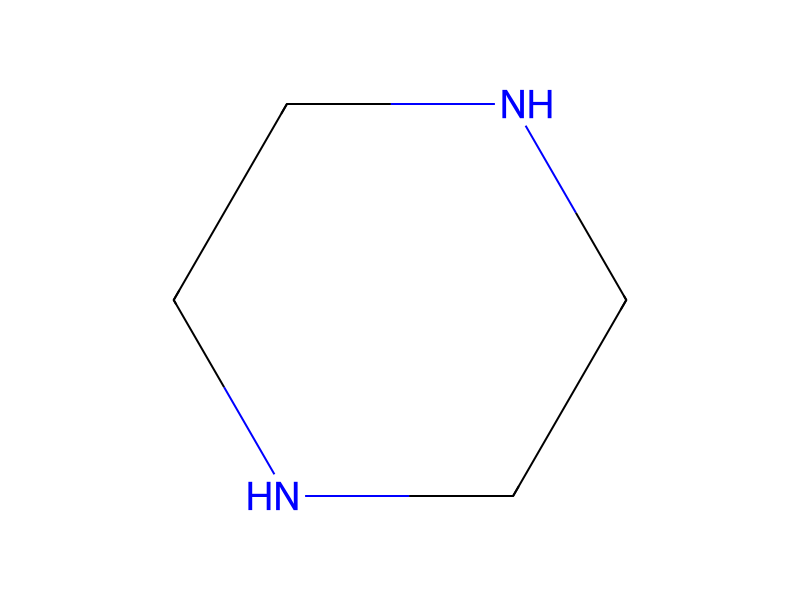
[Cl:1][C:2]1[CH:3]=[C:4]2[C:9](=[CH:10][C:11]=1Cl)[N:8]([CH2:13][CH3:14])[CH:7]=[C:6]([C:15]([OH:17])=[O:16])[C:5]2=[O:18].[NH:19]1[CH2:24][CH2:23][NH:22][CH2:21][CH2:20]1>CS(C)=O>[Cl:1][C:2]1[CH:3]=[C:4]2[C:9](=[CH:10][C:11]=1[N:19]1[CH2:24][CH2:23][NH:22][CH2:21][CH2:20]1)[N:8]([CH2:13][CH3:14])[CH:7]=[C:6]([C:15]([OH:17])=[O:16])[C:5]2=[O:18]2.86 g of 6,7-dichloro-1-ethyl-4-oxo-1,4-dihydro-quinoline-3-carboxylic acid and 10 g of piperazine in 30 cm3 of dimethylsulphoxide were stirred and heated to 110° C. After two hours, the reaction was complete. After evaporation of the solvent under a good vacuum, the residue was taken up in 20 cm3 of water. The solid which precipitated was filtered off and recrystallised from 50 cm3 of a mixture of ethanol (1 volume) and methyl cellosolve (1 volume), which enabled an insoluble impurity, which was separated off by filtration of the hot solution to be removed. The crystals, which precipitated on cooling, were filtered off and recrystallised from the same solvent mixture. 1.2 g of 6-chloro-1-ethyl-4-oxo-7-piperazinyl-1,4-dihydro-quinoline-3-carboxylic acid were obtained; m.p. 228°-232° C.