Triethylamine → 6-(Pyridin-3-YL)hex-5-YN-1-OL
HRID 1583429
Reaktionsgleichung

Br[C:2]1[CH:3]=[N:4][CH:5]=[CH:6][CH:7]=1.[CH2:8]([OH:14])[CH2:9][CH2:10][CH2:11][C:12]#[CH:13].C(N(CC)CC)C>ClCCl>[N:4]1[CH:5]=[CH:6][CH:7]=[C:2]([C:13]#[C:12][CH2:11][CH2:10][CH2:9][CH2:8][OH:14])[CH:3]=1Komponenten
5
Edukt 3

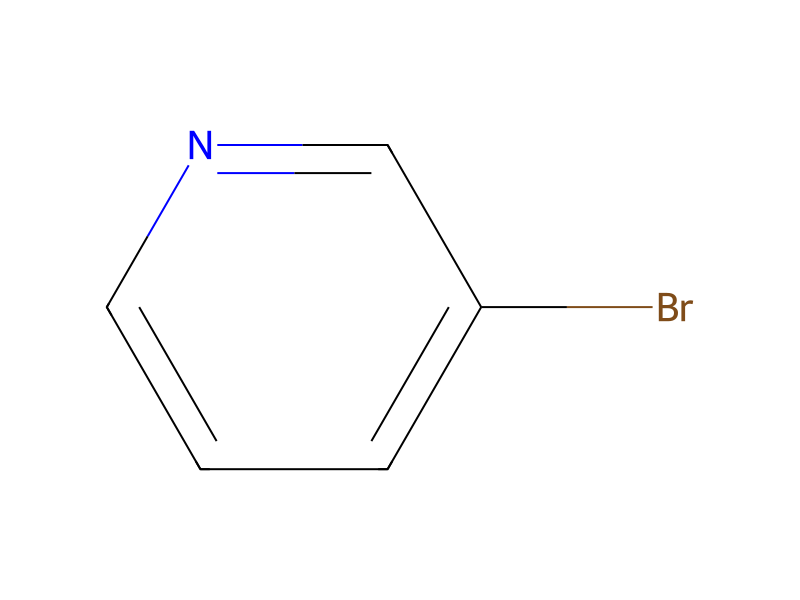

Produkt 1

Reagenzien, Katalysatoren, Lösungsmittel 1

Versuchsvorschrift
A dry 250 ml B 3-neck flask was fitted with a gas inlet tube extending nearly to the bottom of the flask and was charged with 9.81 ml of 3-bromopyridine, 11.8 g of 5-hexyn-1-ol, 40 ml of distilled triethylamine and 60 ml of dichloromethane. The mixture was degassed with argon for 15 minutes and 0.70 g of bis(triphenylphosphine)palladium dichloride and 0.13 g of cuprous iodide were added. The flask was evacuated and filled three times with argon and the reaction was heated to reflux for 2 hours. The cooled mixture was diluted with dichloromethane and was washed with water and brine, dried (potassium carbonate) and concentrated to 20 g of a dark red oil which was used directly in the next step. A portion was chromatographed over 70 g of silica gel eluting with 1:1 ethyl acetate-hexane containing 1% triethylamine to yield a colorless oil which was evaporatively distilled, bp 145°-150° C./0.1 mm to give an analytical sample of 6-(3-pyridinyl)-5-hexyn-1-ol.