(Methylsulfonyl)acetonitrile → HCID 67639908, Verbindung
HRID 1586633
Reaktionsgleichung

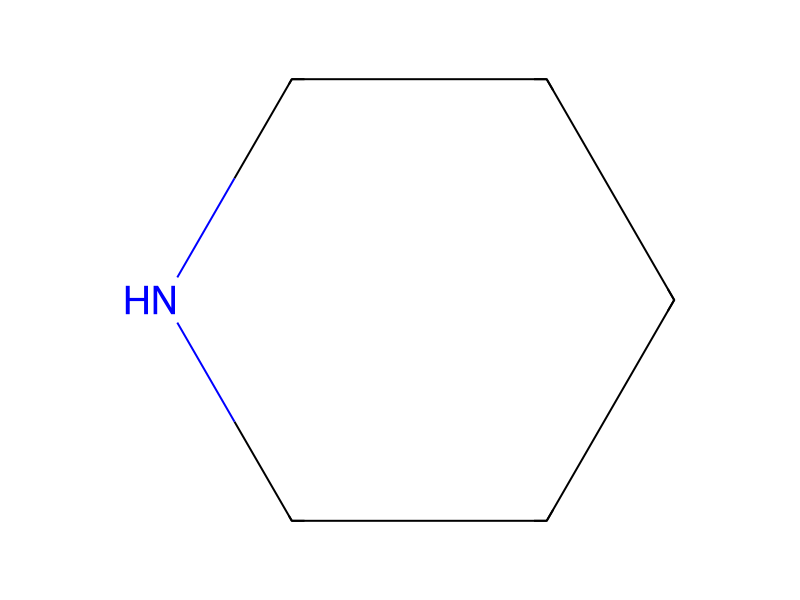
[OH:1][CH2:2][CH2:3][O:4][C:5]1[CH:12]=[CH:11][C:8]([CH:9]=O)=[CH:7][C:6]=1[O:13][CH3:14].[CH3:15][S:16]([CH2:19][C:20]#[N:21])(=[O:18])=[O:17]>N1CCCCC1.C(O)C>[OH:1][CH2:2][CH2:3][O:4][C:5]1[CH:12]=[CH:11][C:8]([CH:9]=[C:19]([S:16]([CH3:15])(=[O:18])=[O:17])[C:20]#[N:21])=[CH:7][C:6]=1[O:13][CH3:14]Komponenten
5
Edukt 2


Produkt 1

Reagenzien, Katalysatoren, Lösungsmittel 2

Versuchsvorschrift
A mixture of 4-(2-hydroxyethoxy)-3-methoxybenzaldehyde (0.98 g, 0.005 mol), (see Example 1 of U.S. Pat. No. 4,707,537, supra), methylsulfonylacetonitrile (0.60 g, 0.005 m), ethanol (10 mL) and piperidine (5 drops) is heated at reflux for 1 hour, during which time the product crystallizes. The reaction mixture is allowed to cool and the very pale yellow product is collected by filtration, washed with ethanol and dried in air. The yield of product is 1.05 g (70.9%). Mass spectrometry supports the following structure: ##STR22## In methylene chloride the product has an absorption maximum at 362 nm.