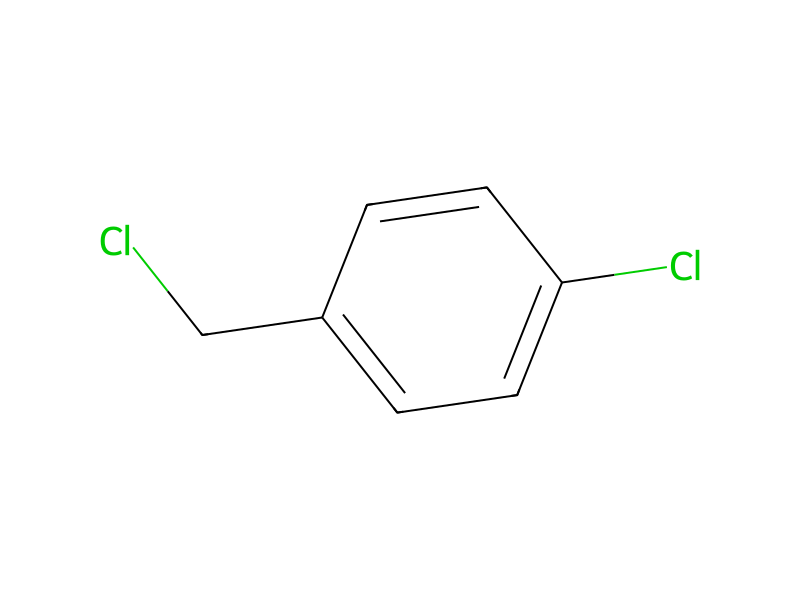
[F:1][C:2]1[CH:7]=[C:6]([OH:8])[CH:5]=[CH:4][C:3]=1[N:9]1[C:14](=[O:15])[CH:13]=[C:12]([C:16]([F:19])([F:18])[F:17])[N:11]([CH3:20])[C:10]1=[O:21].[Cl:22][C:23]1[CH:28]=[CH:27][C:26]([CH2:29]Cl)=[CH:25][CH:24]=1.C(=O)([O-])[O-].[K+].[K+].Cl>CN(C)C=O>[Cl:22][C:23]1[CH:28]=[CH:27][C:26]([CH2:29][O:8][C:6]2[CH:5]=[CH:4][C:3]([N:9]3[C:14](=[O:15])[CH:13]=[C:12]([C:16]([F:17])([F:18])[F:19])[N:11]([CH3:20])[C:10]3=[O:21])=[C:2]([F:1])[CH:7]=2)=[CH:25][CH:24]=1A stirred solution of 0.6 gram (0.002 mole) of 3-(2-fluoro-4-hydroxyphenyl)-1-methyl-6-trifluoromethyluracil, 0.3 gram (0.002 mole) of 4-chlorophenylmethyl chloride, and 0.5 gram (0.004 mole) of potassium carbonate in 50 mL of N,N-dimethylformamide was heated at 80° C. for about 18 hours. After this time the reaction mixture was poured into aqueous 0.25N hydrochloric acid. The mixture was extracted with ethyl acetate, and the combined extracts were washed with water. The organic layer was dried with magnesium sulfate, and the mixture was filtered. The filtrate was then subjected to column chromatography on silica gel. Elution was accomplished using 1:4 heptane in ethyl acetate. The product-containing fractions were combined and concentrated under reduced pressure, yielding 0.7 gram of 3-[4-(4-chlorophenylmethoxy)-2-fluorophenyl]-1-methyl-6-trifluoromethyluracil, mp 134°-135° C. The NMR spectrum was consistent with the proposed structure.