Ammonia → 2,3-Dichloro-4,6-dinitrophenol
Reaktionsgleichung

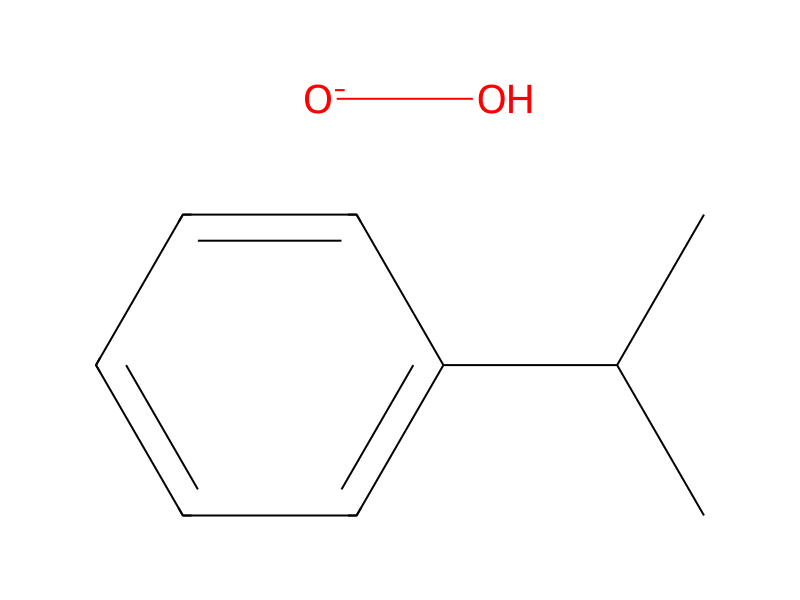
NC1C([OH:8])=CC(O)=C(N)C=1.[OH-].[Na+].N.[O-]O.C1(C(C)C)C=CC=CC=1.[Cl:25][C:26]1[CH:31]=[C:30]([N+:32]([O-:34])=[O:33])[CH:29]=[C:28]([N+:35]([O-:37])=[O:36])[C:27]=1[Cl:38]>C(Cl)Cl>[Cl:25][C:26]1[C:27]([Cl:38])=[C:28]([N+:35]([O-:37])=[O:36])[CH:29]=[C:30]([N+:32]([O-:34])=[O:33])[C:31]=1[OH:8]Komponenten
Edukt 5




Produkt 1

Reagenzien, Katalysatoren, Lösungsmittel 1

Versuchsvorschrift
In a preferred embodiment for making diaminoresorcinol, the base, e.g., sodium hydroxide, is first dissolved in refluxing liquid ammonia in an inert atmosphere. The temperature of refluxing liquid ammonia is dependent upon the pressure and is typically between about -50° C. to about -10° C. Under atmospheric pressure conditions, the refluxing temperature of liquid ammonia is about -33° C. A solution of cumene hydroperoxide and 1,2-dichloro-3,5-dinitrobenzene in methylene chloride is then added to the stirred liquid ammonia reaction mixture at a rate such that the temperature remains at the refluxing temperature. Upon completion of the addition, the ammonia is evaporated and 2,3-dichloro-4,6-dinitrophenol may be isolated by pouring the reaction mixture into excess aqueous hydrochloric acid and extracted with ethyl acetate. Preferably, the 2,3-dichloro-4,6-dinitrophenol product is not isolated or purified, but is directly converted to 4,6-diaminoresorcinol, thus making the production of 4,6-diaminoresorcinol from 1,2-dichloro-3,5-dinitrobenzene a "one pot" process.
Aufarbeitung
- customis typically between about -50° C. to about -10° C
- customis about -33° C
- additionUpon completion of the addition
- customthe ammonia is evaporated
Quellen und Nachweise
- ORD-Eintrag
- ord-429a71b20f00411088209a83430522f2
- Quelldatensatz
- uspto-grants-1995_03
- Patentnummer
- US05399768
Notizen zur Reaktion
Wird geladen…