Reaktionsgleichung

C([C:3]1[CH:8]=[CH:7][CH:6]=[CH:5][C:4]=1[CH:9]=[CH2:10])=C.[CH2:11](C1C=CC=CC=1CC)[CH3:12].[CH2:21]([C:23]1[CH:28]=[CH:27][C:26]([CH2:29][CH3:30])=[CH:25][CH:24]=1)[CH3:22]>>[CH:21]([C:23]1[CH:28]=[CH:27][C:26]([CH:29]=[CH2:30])=[CH:25][CH:24]=1)=[CH2:22].[CH2:11]([CH:10]=[CH:9][C:4]1[CH:3]=[CH:8][CH:7]=[CH:6][CH:5]=1)[CH3:12]Komponenten



Versuchsvorschrift
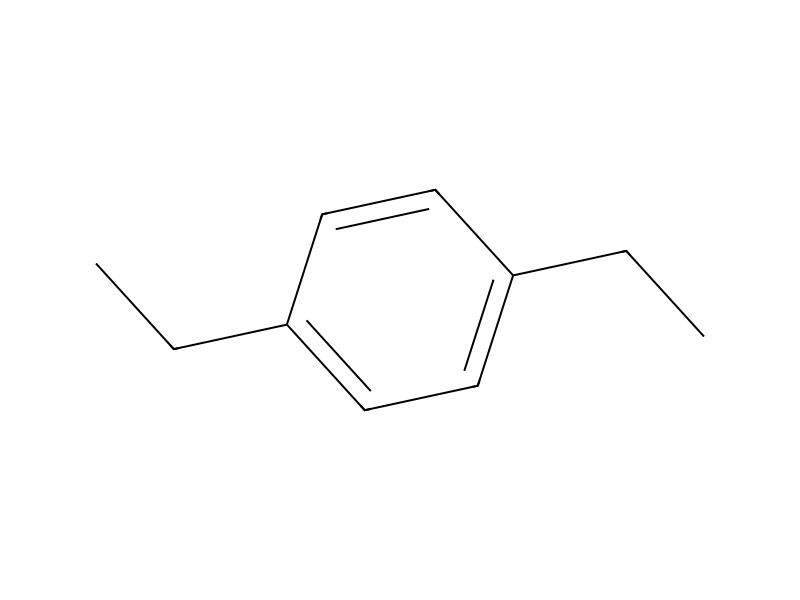
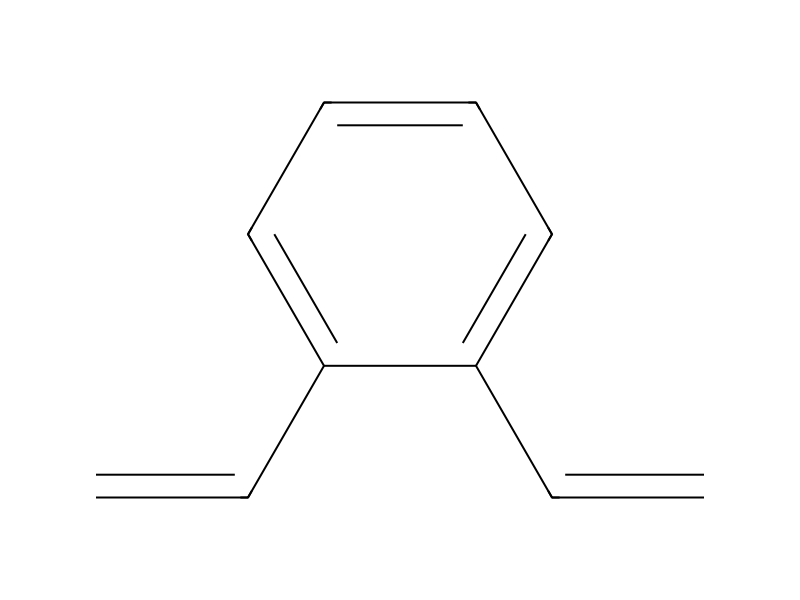
Divinylbenzene can be prepared by the dehydrogenation of diethylbenzene. For example, there is a description in EP 0217492 A1 that the dehydrogenation of para-diethylbenzene with a purity of 93% in the presence of an alkaline dehydrogenation catalyst at a temperature of 620° to 630° C. and at a steam to diethylbenzene ratio (hereinafter referred to as S/D ratio) of 2 to 4 (by weight) occurred at a conversion of approximately 80% to yield approximately 38% by weight of para-divinylbenzene and approximately 30% by weight of para-ethylvinylbenzene. Another description is found in Japan Kokai Tokkyo Koho No. Sho 62-45,542 (1987) that diethylbenzene was dehydrogenated to divinylbenzene at a conversion of approximately 78% with a selectivity (mol) to divinylbenzene of approximately 55% under the conditions where the inlet temperature of the catalyst layer was 620° C., the LHSV based on diethylbenzene was 1 hr-1 and the S/D ratio was 3.
Aufarbeitung
- customat a temperature of 620° to 630° C.
Quellen und Nachweise
- ORD-Eintrag
- ord-af9dbf3d6cb7408c9e9ae55935af91c3
- Quelldatensatz
- uspto-grants-1995_03
- Patentnummer
- US05401895
Verknüpfte Notizen
Wird geladen…