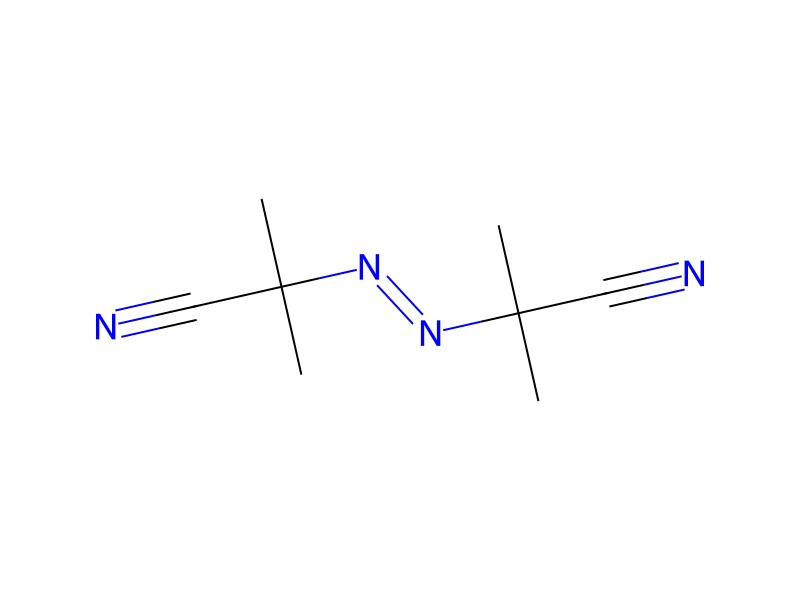
[CH3:1][C:2]1[CH:11]=[CH:10][C:9]2[C:4](=[CH:5][CH:6]=[CH:7][CH:8]=2)[C:3]=1[C:12]([O:14][CH3:15])=[O:13].[Br:16]N1C(=O)CCC1=O.N(C(C)(C)C#N)=NC(C)(C)C#N>C(Cl)(Cl)(Cl)Cl>[Br:16][CH2:1][C:2]1[CH:11]=[CH:10][C:9]2[C:4](=[CH:5][CH:6]=[CH:7][CH:8]=2)[C:3]=1[C:12]([O:14][CH3:15])=[O:13]A solution of methyl 2-methyl-1-naphthoate (1.277 g, 6.377 mmol), N-bromosuccinimide (1.14 g, 6.38 mmol) and 2,2′-azobis(isobutyronitrile) (10 mg) in carbon tetrachloride (10 ml) was heated under reflux for 0.5 hr. After cooling the reaction solution to room temperature, the white precipitate was removed by filtration, and the precipitate was washed with diethyl ether. The solvent of the collected filtrate was evaporated under reduced pressure to give a crude product of methyl 2-bromomethyl-1-naphthoate as a pale-yellow liquid. The obtained liquid, thiophenol (0.84 g, 7.65 mmol) and 1,8-diazabicyclo[5.4.0]-7-undecene (1.14 ml, 7.65 mmol) were stirred in acetonitrile (20 ml) overnight at room temperature. The solvent of the reaction solution was evaporated under reduced pressure, and the obtained crude product was purified by silica gel column chromatography (hexane/ethyl acetate=20/1-9/1) to give the objective substance.