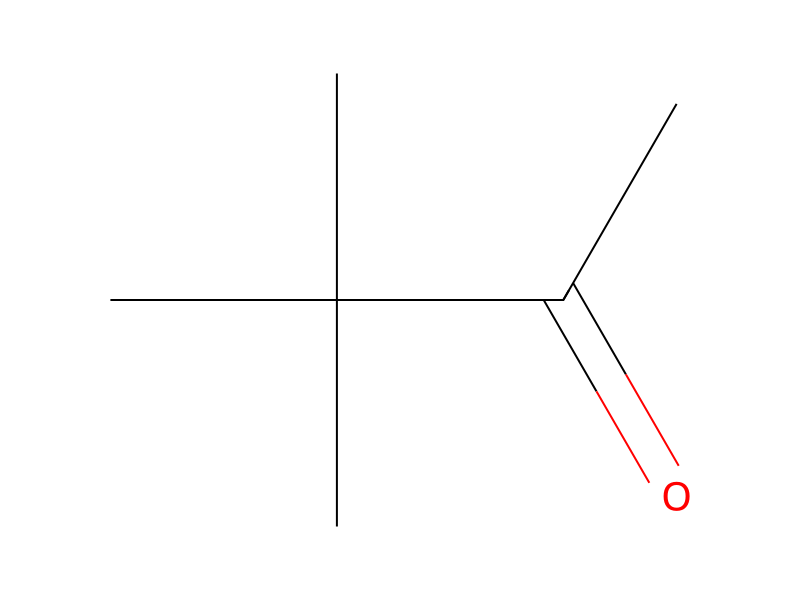
[H-].[Na+].[CH3:3][N:4]([CH3:16])[C:5]1[CH:15]=[CH:14][C:8]([C:9]([O:11]CC)=O)=[CH:7][CH:6]=1.[CH3:17][C:18](=[O:23])[C:19]([CH3:22])([CH3:21])[CH3:20].Cl>O1CCCC1>[CH3:16][N:4]([CH3:3])[C:5]1[CH:6]=[CH:7][C:8]([C:9](=[O:11])[CH2:17][C:18](=[O:23])[C:19]([CH3:22])([CH3:21])[CH3:20])=[CH:14][CH:15]=1Into a 100 ml three-necked flask equipped with a stirrer, a dropping funnel, a reflux condenser, and a nitogen-inlet tube, were charged 2.08 gm (31 mmol) of 60% sodium hydride and 5.0 gm (26 mmol) of ethyl 4-dimethylaminobenzoate. The mixture was dispersed in 40 ml of tetrahydrofuran and heated under refluxing. To the mixture was dropwise added 3.0 gm (30 mmol) of pinacolone and the mixture was heated with stirring for 3 hours. After cooling, 50 ml of 1N hydrochloric acid was added to the reaction mixture, and the organic layer was extracted twice with chloroform. The extract was thoroughly washed with water and dried over anhydrous magnesium sulfate. The solvent was removed by evaporation to obtain an yellow oil. The oily substance was submitted to the Kugelrohr distillation 150° C., 1 mmHg, and crystallized from hexane to give 4.5 gm (yield: 70%) of yellow solid product.