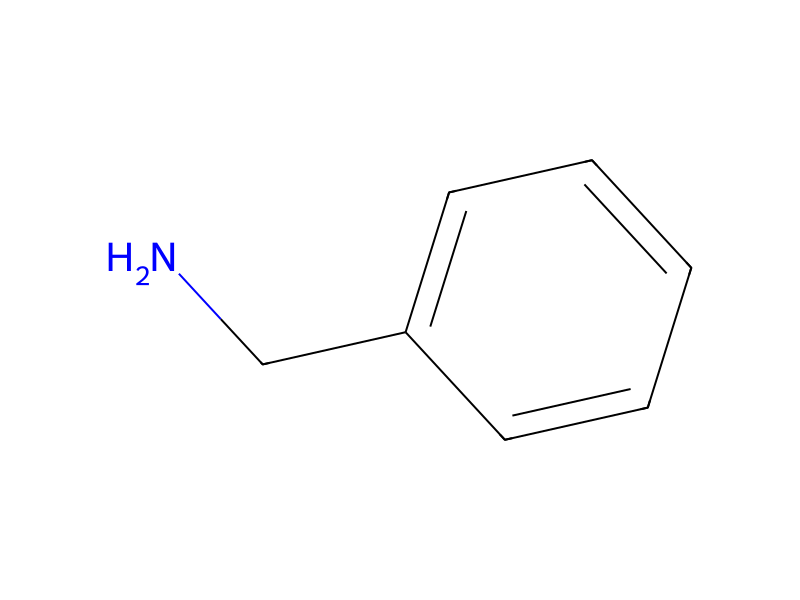
A mixture of 8 g of 7-methoxy-2-tetralone, 4.8 g of benzylamine, 150 ml of anhydrous toluene and 100 mg of p.toluenesulfonic acid is heated with reflux. The residual oil is evaporated to dryness, taken up with 100 ml of methanol then 8.5 g of sodium borohydride are carefully added to the solution at 0°-5° C. The mixture is left under stirring at room temperature overnight, then 50 ml of water are added thereto. The solution is left under stirring for 30 minutes, the solvent is evaporated, the residue is taken up with 30 ml of water and 10 ml of a concentrated ammonium hydroxide solution. The product is extracted with 200 ml of ethyl acetate, the organic phase is dried over sodium sulfate, filtered and evaporated to dryness. A dark oil is obtained that is purified by flash chromatography (elution with a 95/5 mixture of ethyl acetate/methanol). The base thus obtained is transformed into its hydrochloride by dissolving it in 40 ml of isopropanol and by adding isopropanol saturated with hydrogen chloride. Thus, there is obtained 11.4 g of 7-methoxy-2-benzylamino-1,2,3,4-tetrahydronaphtalene hydrochloride; m.p. 265°-267° C. (dec.).