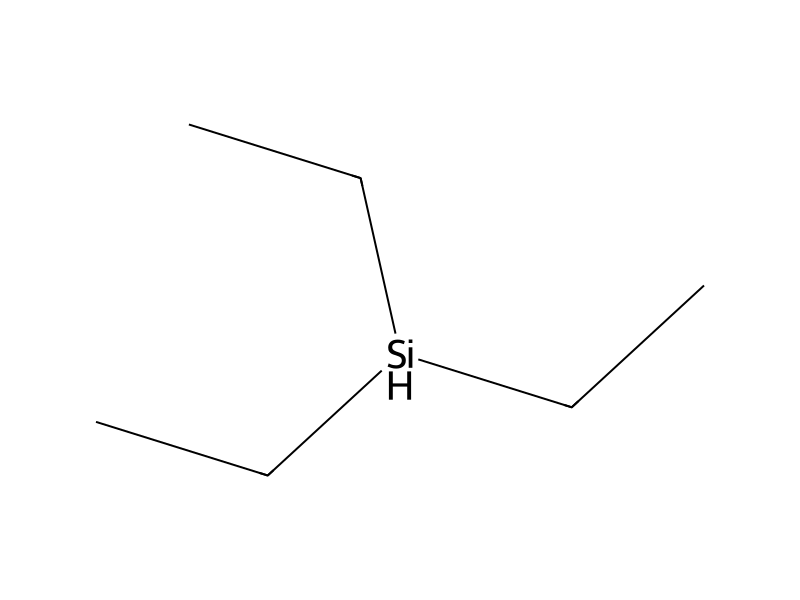
To a stirring solution of 4-(3,4-dichlorophenyl)-4,5,6,7-tetrahydro-1-benzothiophene-4-ol (4.50 g, 15.0 mmol) in methylene chloride (75 mL) were added triethylsilane (11 mL, 69 mmol) and trifluoroacetic acid (12.0 mL, 156 mmol). The solution became reddish orange but no exotherm was observed. The reaction was stirred for 2.5 hr at rt under an atmosphere of nitrogen. The resulting somewhat fluorescent reddish orange solution was concentrated on the rotovap. Ethyl acetate and water were added (˜100 ml each), the mixture was stirred, and a saturated solution of NaHCO3 was slowly added until the mixture became basic. The mixture was transferred to a separatory funnel, the organic layer was separated, and the aqueous layer was extracted again with ethyl acetate. The combined organic layers were washed with brine, dried over sodium sulfate, filtered, and concentrated to leave crude product as a light brown oil. The residue was purified using column chromatography on silica gel (80 g RediSep column, eluant 100% hexane) give the product (3.25 g, 76% yield) as a clear oil. LCMS: (FA) product did not give an ionization peak. 1H NMR (400 MHz, DMSO) δ 7.59-7.50 (d, J=8.3 Hz, 1H), 7.37-7.31 (d, J=2.1 Hz, 1H), 7.26-7.19 (d, J=5.2 Hz, 1H), 7.12-7.01 (dd, J=8.3, 2.1 Hz, 1H), 6.48-6.40 (d, J=5.2 Hz, 1H), 4.11-4.00 (t, J=6.2 Hz, 1H), 2.91-2.71 (m, 2H), 2.14-2.00 (m, 1H), 1.91-1.62 (m, 3H).