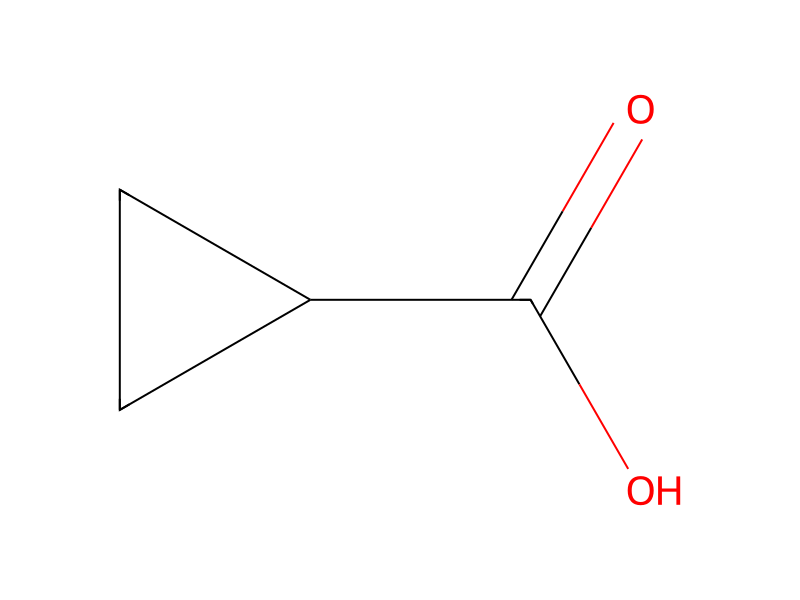
[Br:1][C:2]1[CH:7]=[C:6]([N+:8]([O-:10])=[O:9])[CH:5]=[C:4]([NH2:11])[C:3]=1[NH2:12].[CH:13]1([C:16](O)=O)[CH2:15][CH2:14]1.Cl.[OH-].[Na+]>>[Br:1][C:2]1[C:3]2[N:12]=[C:16]([CH:13]3[CH2:15][CH2:14]3)[NH:11][C:4]=2[CH:5]=[C:6]([N+:8]([O-:10])=[O:9])[CH:7]=1In a 250 mL round-bottom flask a mixture of 3-bromo-5-nitrobenzene-1,2-diamine (4 g, 17.24 mmol) and cyclopropanecarboxylic acid (14.06 ml, 155 mmol) in 3M HCl (40 ml, 120 mmol) was heated to 105° C. for 5 days. The mixture was allowed to cool to room temperature and was poured into chilled 5M NaOH (25 ml, 125 mmol) solution. The resulting mixture was allowed to stand in an icebath and the brown solid that precipitated was collected by filtration. The solid was washed several times with H2O and then dried in a vacuum oven at 50° C. The resulting dark solid 4-bromo-2-cyclopropyl-6-nitro-1H-benzo[d]imidazole (4.3 g, 15.24 mmol, 88% yield) will be used as is in the next step. MS (ES+) m/e: 280.9, 281.8 [M+H]+
Wird geladen…