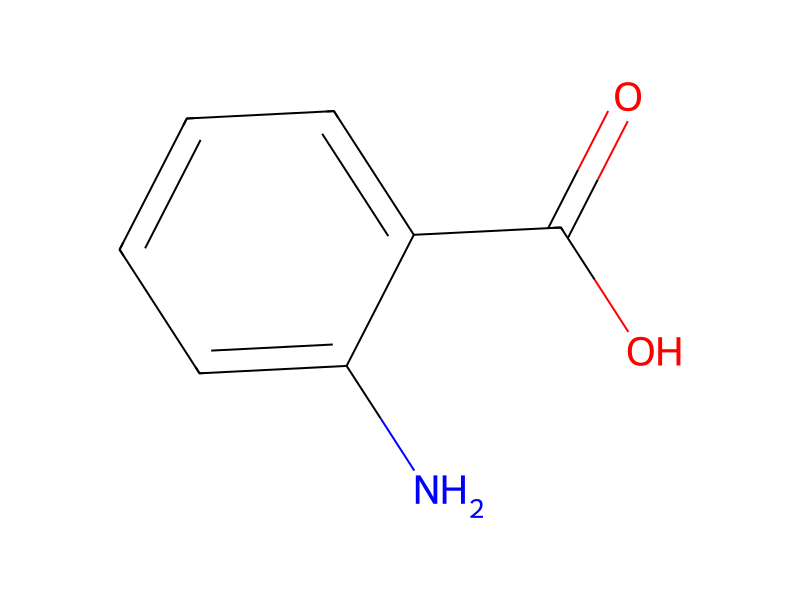
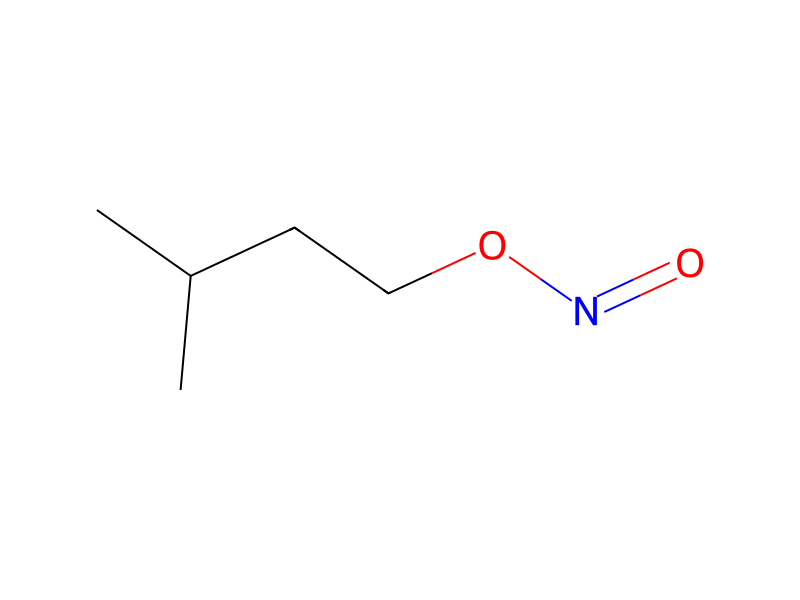
A three-neck round-bottomed flask was equipped with a reflux condenser and two addition funnels. Dry DME(200 ml) was introduced into the flask and 4-chloro-6-methyl-2-pyrone(3.24 g, 22.4 mmol) prepared according to the procedure described in a literature (see: M. J. D. Van Dam et F. KOGL, Recueil 83, 39, 1964) from 4-hydroxy-6-methyl-2-pyrone and phosphorusoxychloride, and trifluoroacetic acid(0.1 ml) were added thereto. Isoamylnitrite(3.15 g, 26.9 mmol) and anthranilic acid(3.69 g, 26.9 mmol) each dissolved in DME(50 ml) were introduced into the respective funnels. The isoamylnitrite solution and anthranilic acid solution were added dropwise simultaneously while keeping the reflux condition. After confirming that the starting materials were completely used, addition was stopped and the reaction solution was cooled. The solvent was removed under reduced pressure and the residue was dissolved in methyene chloride(100 ml) and the organic layer was sequentially washed with 5% aqueous hydrochloric acid solution, 5% aqueous sodium hydroxide solution and water. The organic layer was dried over anhydrous magnesium sulfate and concentrated. The residue was subjected to column chromatography(eluent: n-hexane/ethylacetate=9/1, v/v) to give 2.60 g(14.7 mmol, Yield 55%) of the title compound.