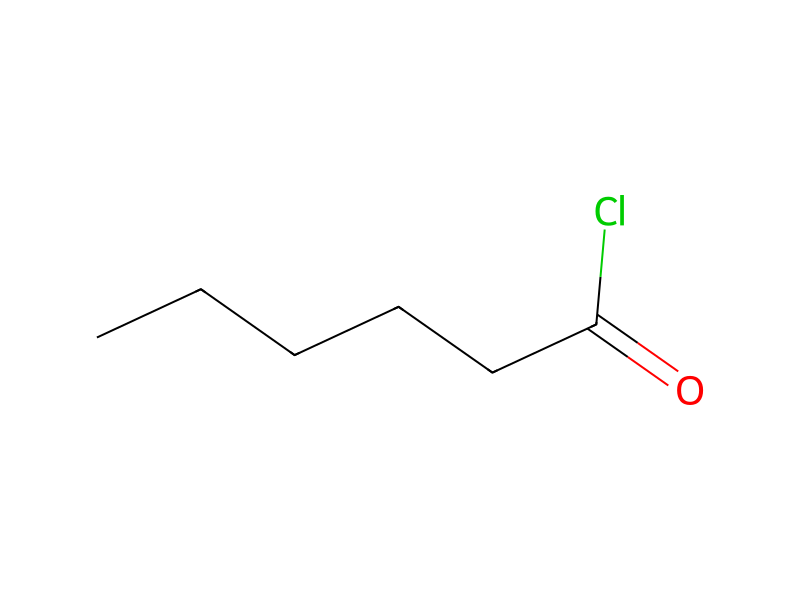
[Cl-].[Cl-].[Cl-].[Al+3].[C:5](Cl)(=[O:11])[CH2:6][CH2:7][CH2:8][CH2:9][CH3:10].[S:13]([N:23]1[C:31]2[C:26](=[CH:27][CH:28]=[CH:29][CH:30]=2)[CH:25]=[CH:24]1)([C:16]1[CH:22]=[CH:21][C:19]([CH3:20])=[CH:18][CH:17]=1)(=[O:15])=[O:14]>ClCCl>[C:5]([C:25]1[C:26]2[C:31](=[CH:30][CH:29]=[CH:28][CH:27]=2)[N:23]([S:13]([C:16]2[CH:22]=[CH:21][C:19]([CH3:20])=[CH:18][CH:17]=2)(=[O:15])=[O:14])[CH:24]=1)(=[O:11])[CH2:6][CH2:7][CH2:8][CH2:9][CH3:10]Aluminium trichloride (6.01 g, 45.2 mmol), is suspended in dichloromethane (80 cm3), under nitrogen. A solution of hexanoyl chloride (5a) (6.62 g, 49.2 mmol) in dichloromethane (20 cm3) is added slowly to the stirred mixture at ambient temperature. After the addition is complete, the mixture is stirred for a further 10 minutes. The reaction mixture is cooled to 5° C. 1-tosylindole (4) (45.2 mmol, 12.24 g) in dichloromethane (20 cm3) is added to the mixture while the temperature is maintained at 5° C. After two hours stirring at room temperature the reaction mixture is treated with ice water, extracted with dichloromethane and dried over magnesium sulphate. Evaporation of the solvent gives a thick oil, which crystallises in the presence of methanol and dichloromethane to yield colourless crystals of 3-hexanoyl-1-tosylindole (6a) (13.07 g, 35.42 mmol, 78%), m.p. 91-93° C.