Reaktionsgleichung

[OH:1][CH2:2][C:3]1([CH3:9])[CH2:8][O:7][CH2:6][O:5][CH2:4]1.[H-].[Na+].Cl[C:13]1[CH:18]=[CH:17][N+:16]([O-:19])=[C:15]([CH3:20])[C:14]=1[O:21][CH3:22]>C1COCC1>[CH3:22][O:21][C:14]1[C:15]([CH3:20])=[N+:16]([O-:19])[CH:17]=[CH:18][C:13]=1[O:1][CH2:2][C:3]1([CH3:9])[CH2:8][O:7][CH2:6][O:5][CH2:4]1Komponenten
5
Edukt 3


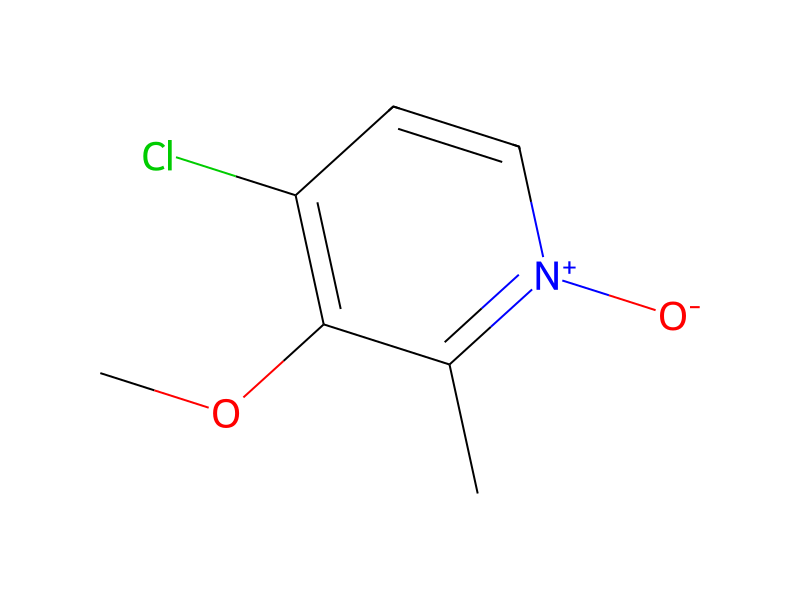
Produkt 1

Reagenzien, Katalysatoren, Lösungsmittel 1

Versuchsvorschrift
A deareated solution of 5-(hydroxymethyl)-5-methyl-1,3-dioxane (1.19 g, 9 mmol) in 125 ml dry THF was treated with NaH (0.79 g 55% dispersion in oil, 18 mmol) for 20 min. 4-Chloro-3-methoxy-2-methylpyridine-N-oxide (1.04 g, 6 mmol) was added and the mixture was refluxed for 26 h. Excess NaH was quenched with 10 ml of H2O and the solvent evaporated. The residue was partitioned between 150 ml CH2Cl2 and 50 ml 5% Na2CO3. The organic layer was passed through a phase separation paper and evaporated leaving 1.83 g enriched product. Chromatography (SiO2CH2Cl2 /MeOH, 95/5) afforded 0.39 g (24%) pure title compound as a tanned oil.
Aufarbeitung
- temperaturethe mixture was refluxed for 26 h
- customExcess NaH was quenched with 10 ml of H2O
- customthe solvent evaporated
- customThe residue was partitioned between 150 ml CH2Cl2 and 50 ml 5% Na2CO3
- customThe organic layer was passed through a phase separation paper
- customevaporated
- customleaving 1.83 g
Quellen und Nachweise
- ORD-Eintrag
- ord-74b8ce39ae504535910b2f3364759b16
- Quelldatensatz
- uspto-grants-1995_07
- Patentnummer
- US05430042
Verknüpfte Notizen
Wird geladen…