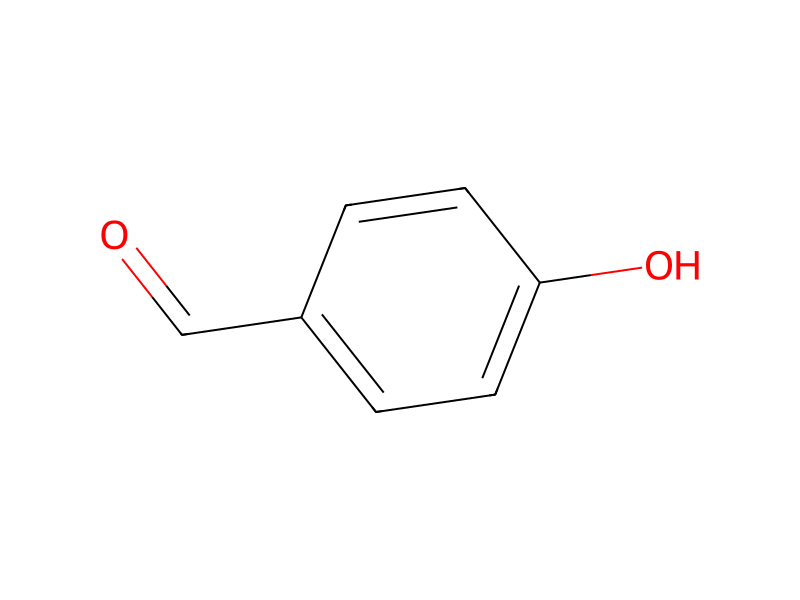
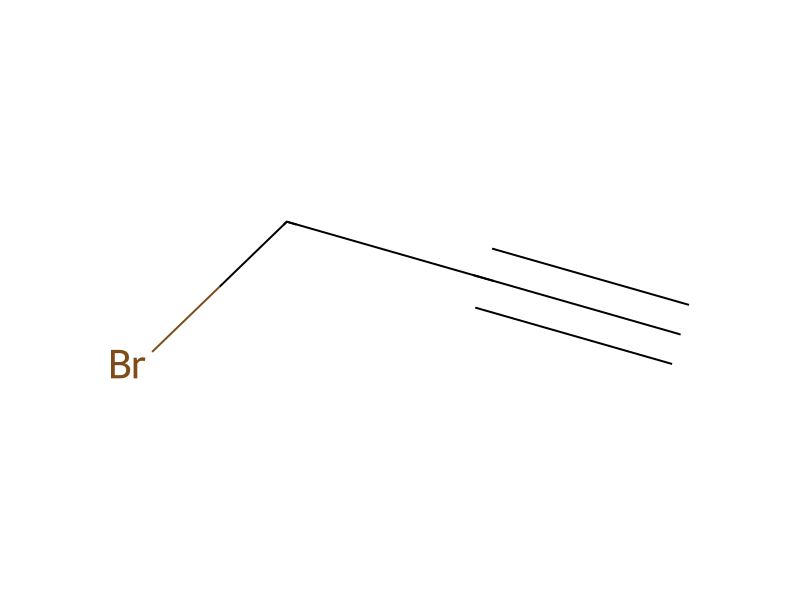
To a stirred suspension of 4-hydroxybenzaldehyde (425.8 g) and K2CO3 (807.6 g) in acetone (2,960 ml) at reflux temper-ature of about 60° C. under a nitrogen atmosphere, was added dropwise 3-bromo-propyne (502.4 g) over a period of 2 hours. The reaction was heated at reflux for 3 more hours. After cooling to room temperature the reaction mixture was filtered and the excess of K2CO3 removed and washed several times with acetone. The filtrate was washed with saturated aqueous solution of NaHCO3 and NaCl. The aqueous phase was extracted with diethyl ether. The combined organic extracts were dried over Na2SO4, filtered and concentrated to a volume of 1 liter. The solution was kept in the refrigerator overnight. The crystals were filtered out and washed with cold diethyl ether. The filtrate was kept in the refrigerator and some more crystals were formed and removed. This procedure was repeated 3 times resulting in 1,385.26 g of 4-(2-propynyloxy) benzaldehyde in 83% yield. The material was analysed by gas chromatography, and shown to be 99.9% pure. Infrared and mass spectroscopic analysis confirmed the structure.