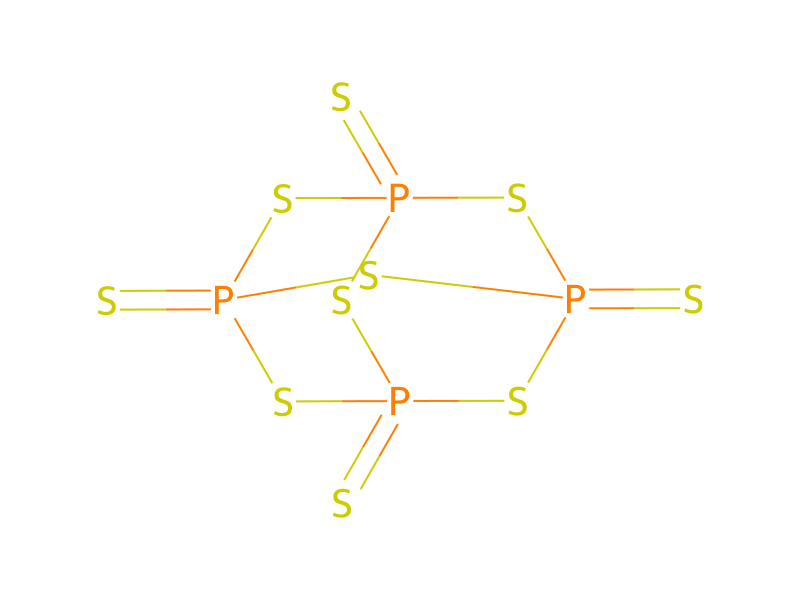
Phosphorus sulfide (P2S5) → ethyl 2-[4-(4-bromo-2-fluorophenylmethyl)-3,4-dihydro-3-thioxo-2H-1,4-benzothiazin-2-yl]acetate
Reaktionsgleichung

[Br:1][C:2]1[CH:7]=[CH:6][C:5]([CH2:8][N:9]2[C:14]3[CH:15]=[CH:16][CH:17]=[CH:18][C:13]=3[S:12][CH:11]([CH2:19][C:20]([O:22][CH2:23][CH3:24])=[O:21])[C:10]2=O)=[C:4]([F:26])[CH:3]=1.P12(SP3(SP(SP(S3)(S1)=S)(=S)S2)=S)=[S:28]>C1(C)C=CC=CC=1>[Br:1][C:2]1[CH:7]=[CH:6][C:5]([CH2:8][N:9]2[C:14]3[CH:15]=[CH:16][CH:17]=[CH:18][C:13]=3[S:12][CH:11]([CH2:19][C:20]([O:22][CH2:23][CH3:24])=[O:21])[C:10]2=[S:28])=[C:4]([F:26])[CH:3]=1Komponenten
4