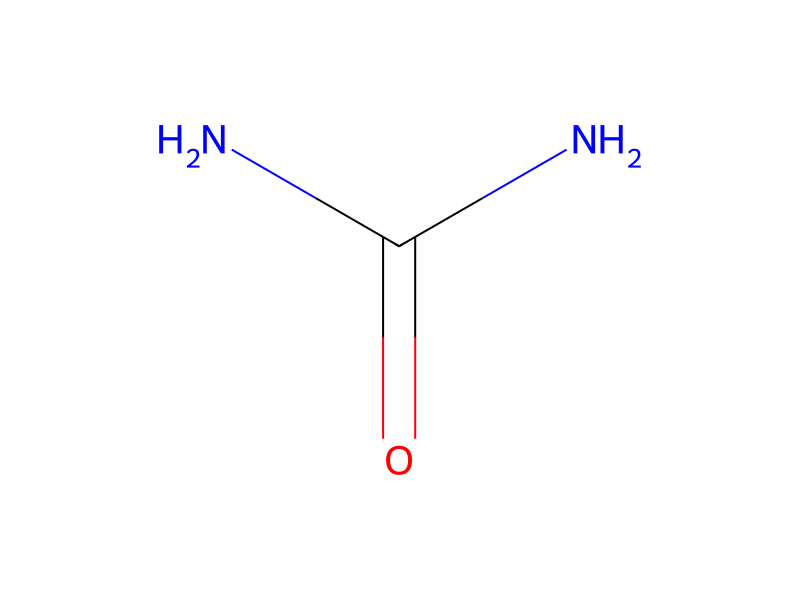
To a suspension of 1.50 g (0.025 mol) of urea in 30 ml of glyme and 4.0 g (0.050 mol) of pyridine was added dropwise with stirring a solution of 5.0 g (0.026 mol) of methyltrifluoromethylmalonyl fluoride in 20 ml of glyme. Urea dissolved during a mildly exothermic reaction and the homogeneous solution was allowed to stand overnight. The mixture was then refluxed briefly, solvent was removed under vacuum, and the residue was stirred with 25 ml of water. Filtration and rinsing with water gave 3.80 g of 5-methyl-5-trifluoromethylbarbituric acid, mp 205°-206.5°C. A second crop, mp 205°-207°C, 0.84 g, brought the yield to 88% (4.64 g). Recrystallization from water gave an analytical sample, mp 205°-206°C; ir (KBr): 3.07 and 3.17 (NH), 5.67 shoulder and 5.80 (C=O), and 8-8.5 μ (CF); nmr ((CD3)2CO): 1H at ca. 7.0 (very broad, 2 (partly exchanged into acetone-d6), NH) and 1.72 ppm (quartet, JHF = 0.7 Hz, 3, CH3); 19F at -70.8 ppm (quartet, JHF = 0.7 Hz, CF3).