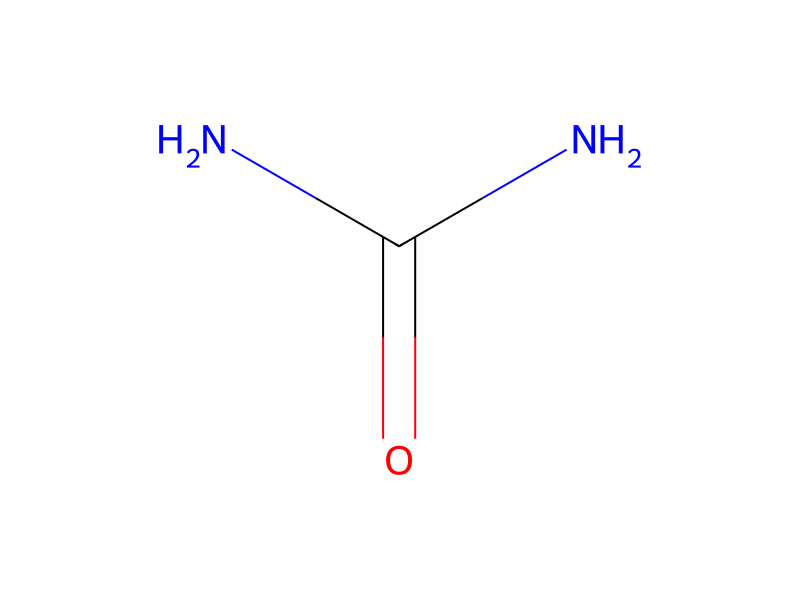
A mixture of 1.70 g (0.028 mol) of urea, 4.4 g (0.056 mol) of pyridine and 30 ml of glyme was stirred at 25°C while a solution of 5.7 g (0.028 mol) of ethyltrifluoromethylmalonyl fluoride in 20 ml of glyme was added rapidly. The mixture was stirred overnight, solvent was removed under vacuum, and the residue was stirred with 15 ml of water. Filtration provided a solid which was recrystallized from water to give 3.8 g of 5-ethyl-5-trifluoromethylbarbituric acid, mp 210°-211°C. A second crop, 0.2 g, mp 208°-209°C, raised the total to 4.0 g (64%). A sample was recrystallized twice from water for analysis, mp 211°C; ir (KBr): 3.05 and 3.18 (NH), 3.49 (satd. CH), 5.72 and 5.82 (C=O), and 8-8.5 μ (CF); nmr ((CD3)2CO): 1H at ca. 8.5 (very broad (partly exchanged into acetone-d6), 2, NH), 2.37 (quartet with fine structure, JHH = 7.5 Hz, 2, CH2); and 0.94 ppm (triplet, JHH = 7.5 Hz, 3, CH3); 19F at -69.3 ppm (singlet with fine structure, CF3).