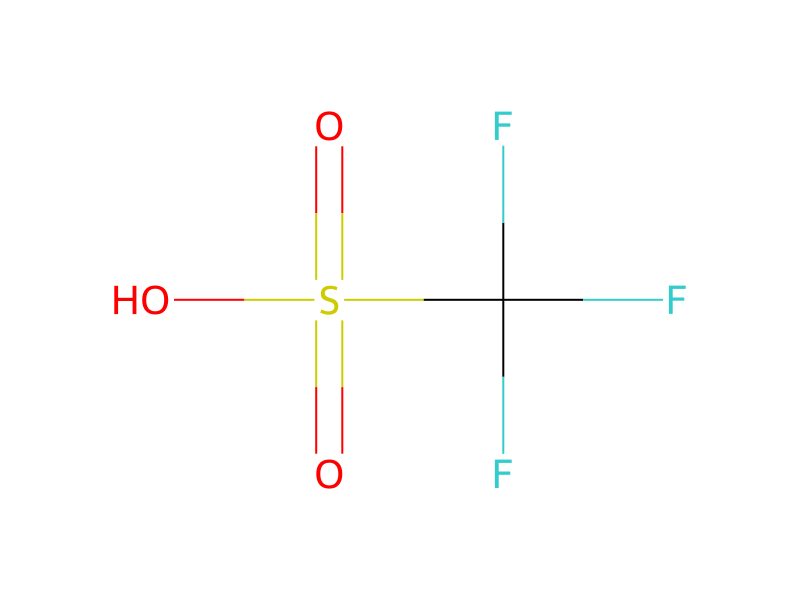
To a suspension of 2,2-dimethyl-7-nitro-2H-1,4-benzoxazin-3(4H)-one (compound obtained in Reference Example 1(1), 1.00 g) in dichloromethane (50 mL) was added bis(pyridine)iodonium tetrafluoroborate (1.68 g), and the mixture was stirred at room temperature for 1 hour. To the reaction mixture were further added bis(pyridine)-iodonium tetrafluoroborate (0.84 g) and trifluoromethanesulfonic acid (1.2 mL), and the mixture was stirred at room temperature for 15 hours. The reaction mixture was concentrated in vacuo. The resultant residue was diluted with ethyl acetate, tetrahydrofuran and water, and the mixture was extracted with ethyl acetate. The organic layer was washed successively with an aqueous saturated sodium hydrogencarbonate solution, an aqueous 15% sodium thiosulfate solution, water and brine, dried over sodium sulfate and concentrated in vacuo. The resultant residue was triturated in n-hexane/ethyl acetate to give 5-iodo-2,2-dimethyl-7-nitro-2H-1,4-benzoxazin-3(4H)-one (0.90 g) as a pale brown powder.