StartseiteMCPWorkbenchSkills
StartseiteWorkbenchBenachrichtigungenMein Bereich
llms.txt · MCP-AnleitungDatenschutz · Nutzungsbedingungen · Supportv1.8.3
  1. Startseite
  2. /Reaktion

Triethylamine → HCID 67350460, Verbindung

HRID 1672831
Drucken

Reaktionsgleichung

Reaktionsgleichung von HRID 1672831
[CH3:1][S:2][C:3]1[N:4]=[CH:5][C:6]2[C:15](=[O:16])[N:14]([C:17]3[CH:18]=[C:19]([CH:23]=[CH:24][CH:25]=3)C(O)=O)[CH2:13][C@H:12]3[N:8]([CH2:9][CH2:10][CH2:11]3)[C:7]=2[N:26]=1.Cl.[CH3:28][O:29][C:30](=[O:36])[C@H:31]([C@@H:33]([CH3:35])[OH:34])[NH2:32].[CH2:37](N(CC)CC)C.Cl.C(N=C=NCCCN(C)C)C.ON1C2C=CC=CC=2N=N1.S(Cl)(Cl)=O.C(=O)(O)[O-].[Na+]>ClCCl.C(Cl)(Cl)Cl>[CH3:35][C@@H:33]1[O:34][C:37]([C:19]2[CH:23]=[CH:24][CH:25]=[C:17]([N:14]3[CH2:13][C@H:12]4[N:8]([CH2:9][CH2:10][CH2:11]4)[C:7]4[N:26]=[C:3]([S:2][CH3:1])[N:4]=[CH:5][C:6]=4[C:15]3=[O:16])[CH:18]=2)=[N:32][C@@H:31]1[C:30]([O:29][CH3:28])=[O:36]
KomponentenReaktionsbedingungenVersuchsvorschriftAufarbeitungQuellen und NachweiseNotizen zur Reaktion

Komponenten

10

Edukt 7

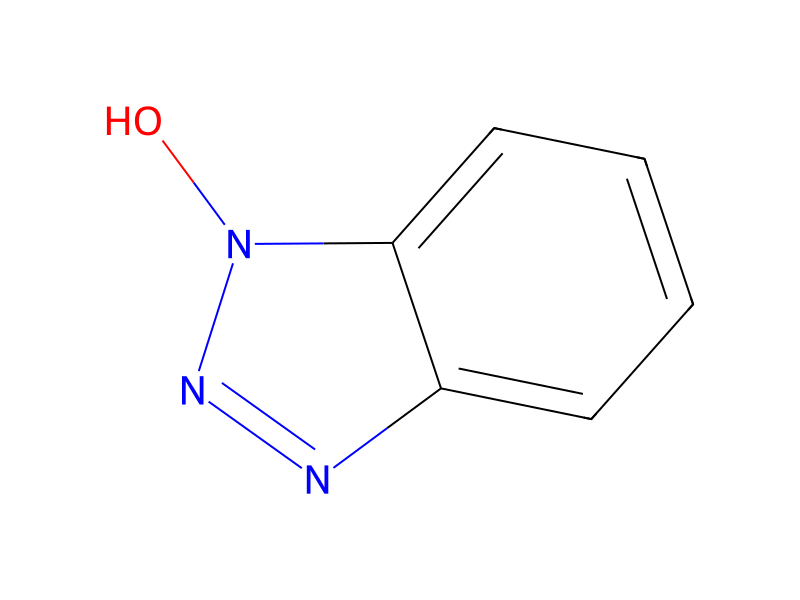
HCID 8471TriethylamineHCID 24386Thionyl ChlorideHCID 757711-HydroxybenzotriazoleHCID 516892Sodium BicarbonateHCID 27239391,3-Propanediamine, N'-(ethylcarbonimidoyl)-N,N-dimethyl-, monohydrochlorideHCID 2734893Methyl L-threoninate hydrochloride
HCID 67350552
(S)-3-(9-methylthio-6-oxo-2,3,3a,4-tetrahydro-1H,6H-5,8,10,10b-tetraazabenzo[e]azulen-5-yl)benzoic acid

Produkt 1

HCID 67350460HCID 67350460, Verbindung

Reagenzien, Katalysatoren, Lösungsmittel 2

HCID 6212ChloroformLösungsmittelHCID 6344DichloromethaneLösungsmittel

Reaktionsbedingungen

Temperatur
0 °C

Versuchsvorschrift

(S)-3-(9-Methylthio-6-oxo-2,3,3a,4-tetrahydro-1H,6H-5,8,10,10b-tetraazabenzo[e]azulen-5-yl)benzoic acid (2.00 g, 5.40 mmol) obtained in Step 1 of Example 56 was dissolved in dichloromethane (80 mL), and the mixture was stirred for 4 hours after adding L-threonine methyl ester hydrochloride (3.11 g, 16.2 mmol), triethylamine (2.26 mL, 16.2 mmol), 1-ethyl-3-(3dimethylaminopropyl)carbodiimide hydrochloride (1.24 g, 6.48 mmol), and 1-hydroxybenzotriazole.monohydrate (827 mg, 5.40 mmol). The mixture was diluted by addition of chloroform, and washed with a saturated aqueous sodium bicarbonate solution. The organic layer was dried over anhydrous magnesium sulfate and concentrated under reduced pressure. The resulting residue was dissolved in dichloromethane (80 mL), cooled to 0° C., and stirred at room temperature for 4.5 hours after adding thionyl chloride (2.85 mL, 3.91 mmol). Then, the mixture was poured into a saturated aqueous sodium bicarbonate solution, and extracted with chloroform. The organic layer was then dried over anhydrous magnesium sulfate, and concentrated under reduced pressure to give methyl (4S,5S)-5-methyl-2-[3-((S)-9-methylthio-6-oxo-2,3,3a,4-tetrahydro-1H,6H-5,8,10,10b-tetraazabenzo[e]azulen-5-yl)phenyl]-4,5-dihydro-1,3-oxazole-4-carboxylate as a crude product. Using methyl (4S,5S)-5-methyl-2-[3-((S)-9-methylthio-6-oxo-2,3,3a,4-tetrahydro-1H,6H-5,8,10,10b-tetraazabenzo[e]azulen-5-yl)phenyl]-4,5-dihydrooxazole-4-carboxylate so obtained, methyl (S)-5-methyl-2-[3-(9-methylthio-6-oxo-2,3,3a,4-tetrahydro-1H,6H-5,8,10,10b-tetraazabenzo[e]azulen-5-yl)phenyl]-1,3-oxazole-4-carboxylate (2.04 g, 81%) was obtained in the same manner as in Step 2 of Example 123.


Aufarbeitung

  1. washwashed with a saturated aqueous sodium bicarbonate solution
  2. dry with materialThe organic layer was dried over anhydrous magnesium sulfate
  3. concentrationconcentrated under reduced pressure
  4. dissolutionThe resulting residue was dissolved in dichloromethane (80 mL)
  5. stirringstirred at room temperature for 4.5 hours
  6. extractionextracted with chloroform
  7. dry with materialThe organic layer was then dried over anhydrous magnesium sulfate
  8. concentrationconcentrated under reduced pressure

Quellen und Nachweise

ORD-Eintrag
ord-b92f9716233d43419b636fed8d5ff3eb
Quelldatensatz
uspto-grants-2011_08
DOI
10.6084/m9.figshare.5104873.v1
Patentnummer
US07998954B2

Notizen zur Reaktion

Auf dieser SeiteKomponentenReaktionsbedingungenVersuchsvorschriftAufarbeitungQuellen und NachweiseNotizen zur Reaktion