2-Methyl-5-quinolinecarboxylic acid → 4-methyl-5-(2-methyl-5-quinolinyl)-4H-1,2,4-triazole-3-thiol
Reaktionsgleichung

OC1C2N=NNC=2C=CC=1.Cl.CN(C)CCCN=C=NCC.[CH3:23][C:24]1[CH:33]=[CH:32][C:31]2[C:30]([C:34](O)=O)=[CH:29][CH:28]=[CH:27][C:26]=2[N:25]=1.[CH3:37][NH:38][C:39](=[S:42])[NH:40][NH2:41]>CN(C)C=O.C(N(CC)CC)C>[CH3:37][N:38]1[C:34]([C:30]2[CH:29]=[CH:28][CH:27]=[C:26]3[C:31]=2[CH:32]=[CH:33][C:24]([CH3:23])=[N:25]3)=[N:41][NH:40][C:39]1=[S:42]Komponenten
Edukt 4

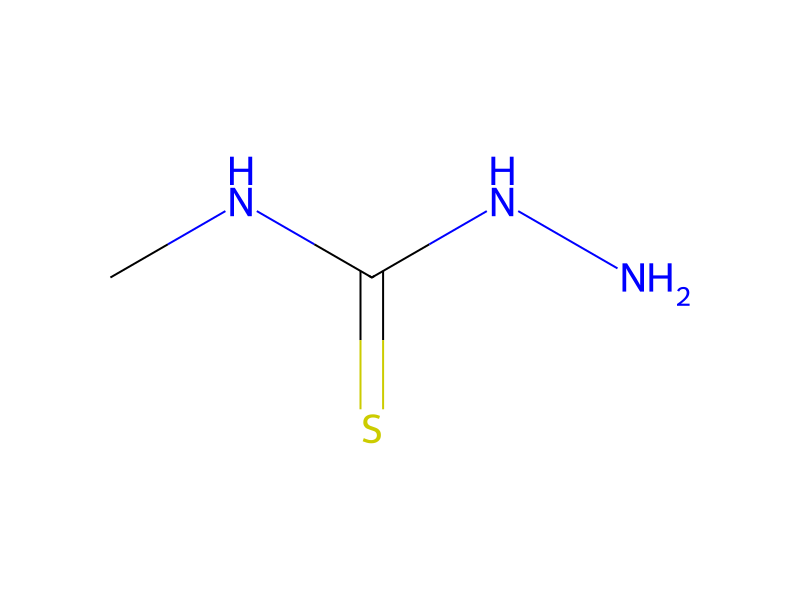


Produkt 1

Reagenzien, Katalysatoren, Lösungsmittel 2


Reaktionsbedingungen
- Temperatur
- 80 °C
Versuchsvorschrift
Hydroxybenzotriazole (7.8 g), 1-(3-dimethylaminopropyl)-3-ethylcarbodiimide hydrochloride (11 g) and triethylamine were successively added to a stirred solution of 2-methyl-5-quinolinecarboxylic acid (10g) and 4-methyl-3-thiosemicarbazide (6.1 g) in dimethylformamide (200 ml), at 0° C. Following the addiction the reaction mixture was allowed to reach room temperature, the stirred continued over night and then the solvent was evaporated under reduced pressure. The residue was treated with an aqueous sodium hydroxide solution (500 ml, 0.5N) and the mixture was stirred at 80° C. for 3 h, after which time the mixture was cooled to room temperature and the pH adjusted to pH 6 using a aqueous hydrochloridric acid solution (2M) and the resulting precipitatye was filtered and dried in vacuo to give the title compound (11 g) as an off-white solid.
Aufarbeitung
- customto reach room temperature
- waitthe stirred continued over night
- customthe solvent was evaporated under reduced pressure
- additionThe residue was treated with an aqueous sodium hydroxide solution (500 ml, 0.5N)
- temperatureafter which time the mixture was cooled to room temperature
- filtrationthe resulting precipitatye was filtered
- customdried in vacuo
Quellen und Nachweise
- ORD-Eintrag
- ord-91485ccadc7847789fa1aa4c0d0830ed
- Quelldatensatz
- uspto-grants-2011_08
- Patentnummer
- US08003638B2
Notizen zur Reaktion
Wird geladen…