Pyridine → 2-Carbomethoxy-5-tert-butyl-3-furyl isocyanate
Reaktionsgleichung

[C:1](Cl)([Cl:3])=[O:2].[NH2:5][C:6]1[CH:10]=[C:9]([C:11]([CH3:14])([CH3:13])[CH3:12])[O:8][C:7]=1[C:15]([O:17][CH3:18])=[O:16].[N:19]1[CH:24]=[CH:23][CH:22]=[CH:21][CH:20]=1>C(Cl)Cl>[C:15]([C:7]1[O:8][C:9]([C:11]([CH3:14])([CH3:13])[CH3:12])=[CH:10][C:6]=1[N:5]=[C:1]=[O:2])([O:17][CH3:18])=[O:16].[ClH:3].[NH+:19]1[CH:24]=[CH:23][CH:22]=[CH:21][CH:20]=1Komponenten
6
Edukt 3



Produkt 2

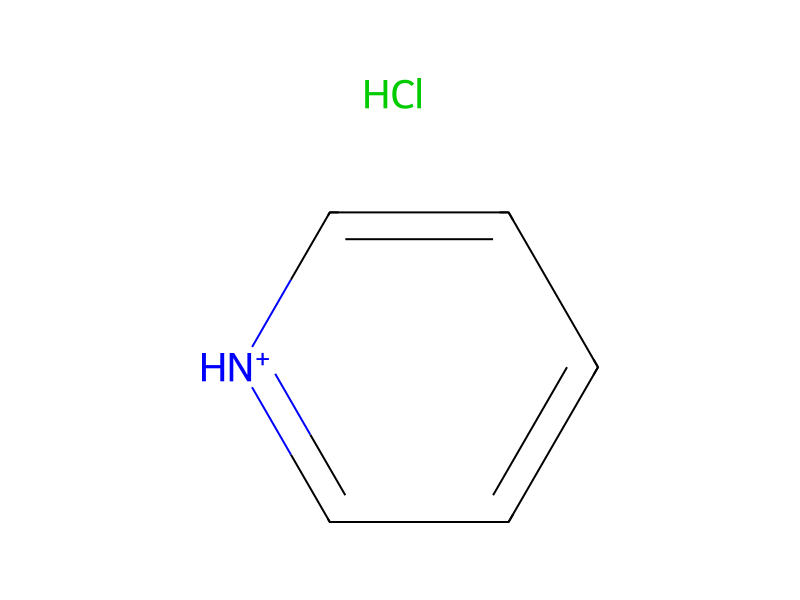
Reagenzien, Katalysatoren, Lösungsmittel 1

Versuchsvorschrift
To a solution of phosgene (1.93M in toluene, 9.7 mL, 18.6 mmol, 3.0 equiv) in CH2Cl2 (80 mL) at 0° C. was added a solution of methyl 3-amino-5-tert-butylfuran-2-carboxylate (1.23 g, 6.2 mmol) and pyridine (1.97 g, 24.9 mmol, 4.0 equiv) in CH2Cl2 (20 mL). The reaction mixture was allowed to slowly warm to room temp. and rapidly form a precipitate. The resulting slurry was stirred at room temp. for 1 h, then concentrated under reduced pressure to give 2-carbomethoxy-5-tert-butyl-3-furyl isocyanate and pyridinium hydrochloride. 2-Carbomethoxy-5-tert-butyl-3-furyl isocyanate: 1H NMR (CDCl3) δ1.25 (s, 9H), 4.85 (s, 3H), 5.90 (s, 1H). The mixture was used in the next step without further purification.
Aufarbeitung
- temperatureto slowly warm to room temp.
- customrapidly form a precipitate
- concentrationconcentrated under reduced pressure
Quellen und Nachweise
- ORD-Eintrag
- ord-4027bf23515b4fe291fd6fa24193eaca
- Quelldatensatz
- uspto-grants-2002_02
- Patentnummer
- US06344476B1
Notizen zur Reaktion
Wird geladen…