Ammonia → HCID 18319595, Verbindung
Reaktionsgleichung

[C:1]([C:4]1[C:14]2[O:13][CH2:12][CH2:11][C:10]([C:15]([O:17][CH2:18][CH3:19])=[O:16])=[CH:9][C:8]=2[CH:7]=[CH:6][CH:5]=1)(O)=[O:2].O.O[N:22]1C2C=CC=CC=2N=N1.N>O1CCCC1>[C:1]([C:4]1[C:14]2[O:13][CH2:12][CH2:11][C:10]([C:15]([O:17][CH2:18][CH3:19])=[O:16])=[CH:9][C:8]=2[CH:7]=[CH:6][CH:5]=1)(=[O:2])[NH2:22]Komponenten
5
Edukt 3

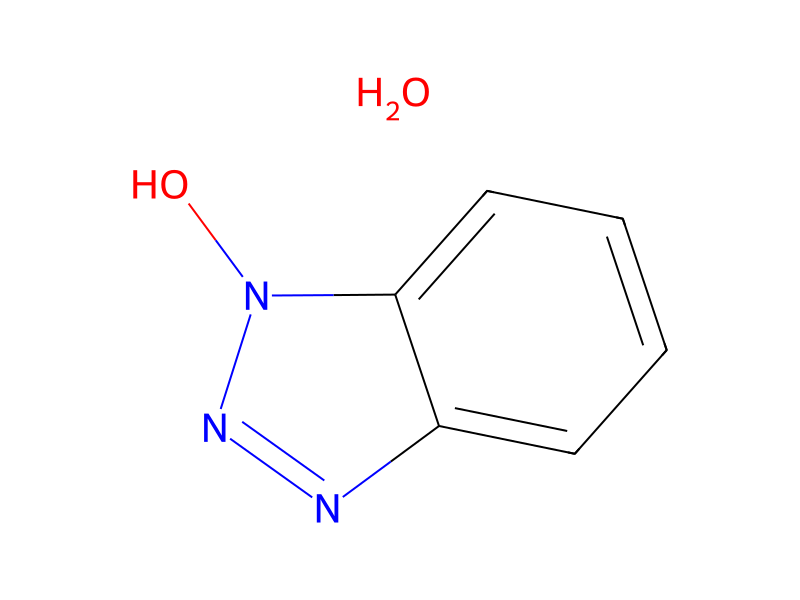

Produkt 1

Reagenzien, Katalysatoren, Lösungsmittel 1

Versuchsvorschrift
A solution of ethyl 9-carboxy-2,3-dihydro-1-benzoxepin-4-carboxylate (1.0 g) in tetrahydrofuran (10 ml) was cooled in an ice bath. To this solution was added 1-hydroxybenzotriazole hydrate (0.57 g) and 1-(3-dimethylaminopropyl)-3-ethylcarboxiimide hydrochloride (0.80 g). Thereto aqueous ammonia (0.28 ml) was added dropwise at 5° C. The reaction mixture was stirred for 7 hours at ambient temperature and partitioned between ethyl acetate and 1N hydrochloric acid. The aqueous layer was extracted twice with ethyl acetate. The combined organic layer was washed successively with saturated aqueous sodium bicarbonate and brine, dried over anhydrous magnesium sulfate and evaporated in vacuo. The residue was purified by column chromatography on silica gel using a mixture of chloroform and methanol (9:1) to give ethyl 2,3-dihydro-9-carbamoyl-1-benzoxepin-4-carboxylate (0.31 g).