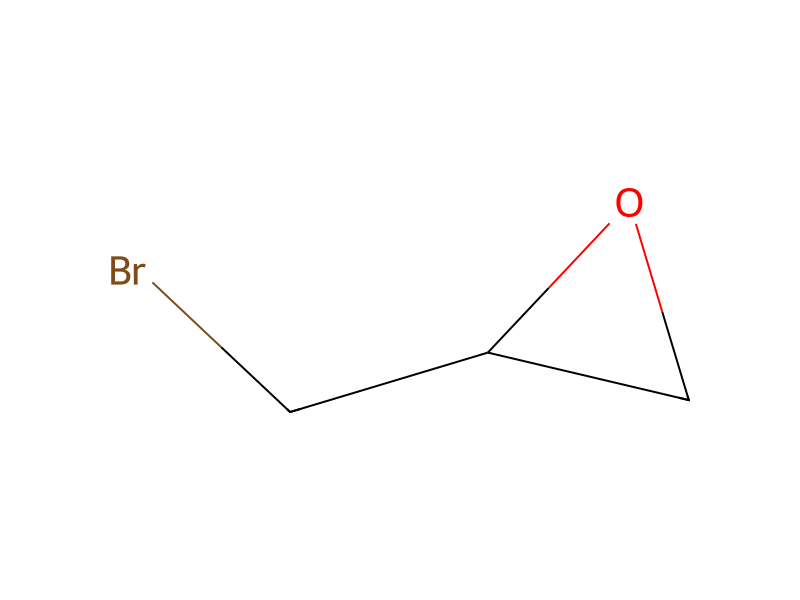
Epibromohydrin → 2-[4-(1,2-Epoxy-propoxy)-phenyl]-3-methyl-6-methoxy-3,4-dihydro-quinazolin-4-one
HRID 1701952
Reaktionsgleichung

[OH:1][C:2]1[CH:7]=[CH:6][C:5]([C:8]2[N:17]([CH3:18])[C:16](=[O:19])[C:15]3[C:10](=[CH:11][CH:12]=[C:13]([O:20][CH3:21])[CH:14]=3)[N:9]=2)=[CH:4][CH:3]=1.[CH2:22]([CH:24]1[O:26][CH2:25]1)Br>CS(C)=O>[O:26]1[CH:24]([CH3:22])[CH:25]1[O:1][C:2]1[CH:7]=[CH:6][C:5]([C:8]2[N:17]([CH3:18])[C:16](=[O:19])[C:15]3[C:10](=[CH:11][CH:12]=[C:13]([O:20][CH3:21])[CH:14]=3)[N:9]=2)=[CH:4][CH:3]=1Komponenten
4
Edukt 2

Produkt 1

Reagenzien, Katalysatoren, Lösungsmittel 1

Versuchsvorschrift
2.8 gm (10 mmols) of 2-(4-hydroxyphenyl)-3-methyl-6-methoxy-3,4-dihydro-quinazolin-4-one were dissolved in 20 ml of dimethylsulfoxide, and the solution was mixed, while stirring, with 1.35 gm (10 mmols+20%) of potassium tert. butylate. Subsequently, 2.8 ml of epibromohydrin were added, and the reaction mixture was stirred at room temperature until the reaction had gone to completion. After pouring the reaction mixture into ice water, the crystalline precipitate formed thereby was suction-filtered off, washed well with water and dried.