Dimethylamine → HCID 20460605, Verbindung
HRID 1702639
Reaktionsgleichung

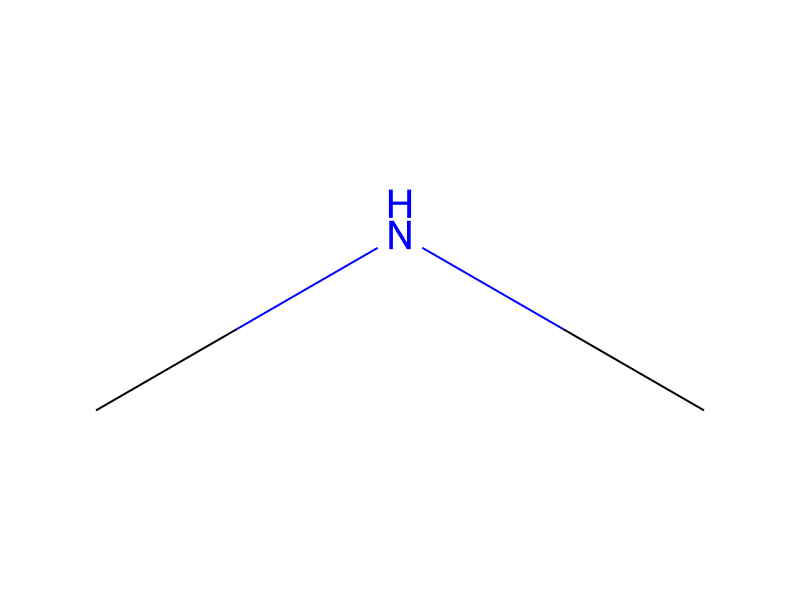
Br[CH:2]([CH3:21])[C:3]([NH:5][C:6]1[CH2:10][CH2:9][N:8]([C:11]2[CH:12]=[C:13]([C:17]([F:20])([F:19])[F:18])[CH:14]=[CH:15][CH:16]=2)[N:7]=1)=[O:4].[CH3:22][NH:23][CH3:24]>C1C=CC=CC=1>[CH3:22][N:23]([CH3:24])[CH:2]([CH3:21])[C:3]([NH:5][C:6]1[CH2:10][CH2:9][N:8]([C:11]2[CH:12]=[C:13]([C:17]([F:20])([F:19])[F:18])[CH:14]=[CH:15][CH:16]=2)[N:7]=1)=[O:4]Komponenten
4
Edukt 2

Produkt 1

Reagenzien, Katalysatoren, Lösungsmittel 1

Versuchsvorschrift
A 1.0 g. amount of 2-bromo-N-[1-(α,α,α-trifluoro-m-tolyl)-2-pyrazolin-3-yl]propionamide (Example 12) is dissolved in 50 ml. of benzene in a pressure bottle, then 2.0 ml. of dimethylamine is added and the bottle is sealed for 1/2 hour at room temperature with the separation of crystals. The mixture is heated on a steam bath for 6 hours, then is cooled. The reaction mixture is partitioned between water and benzene. The benzene layer is dried over anhydrous magnesium sulfate and evaporated to a dark gum. The gum is dissolved in hexane and filtered through a hydrous magnesium silicate. The filtrate is evaporated to a gum (0.9 g.). A 210 mg. amount of this gum is chromatographed by thick layer chromatography on one mm Silica Gel G plates using the upper phase of a mixture of 2 parts benzene, 1 part acetone and 2 parts water to give 180 mg. of the desired product as a light yellow gum.