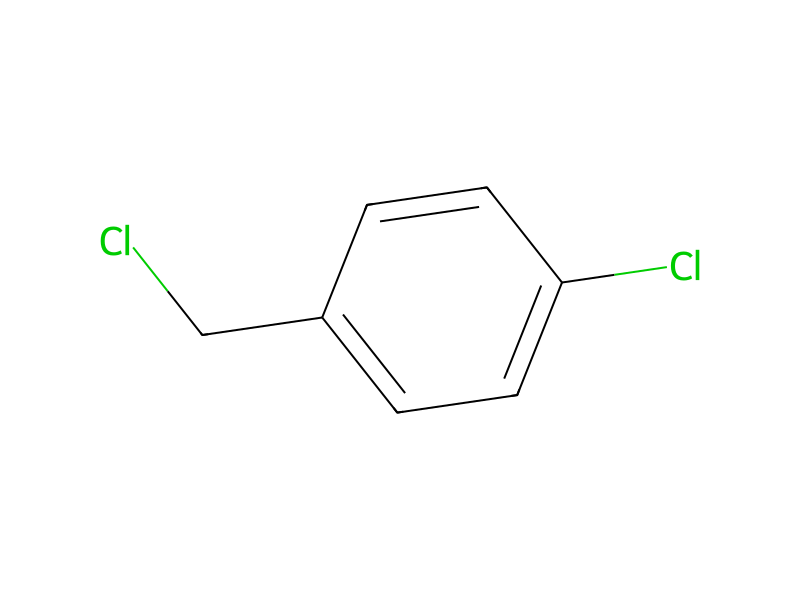
[CH3:1][O:2][C:3]1[CH:4]=[C:5]2[CH:11]=[C:10]([C:12]([O:14][CH2:15][CH3:16])=[O:13])[NH:9][C:6]2=[N:7][CH:8]=1.[H-].[Na+].[Cl:19][C:20]1[CH:27]=[CH:26][C:23]([CH2:24]Cl)=[CH:22][CH:21]=1>CN(C=O)C.C1COCC1>[Cl:19][C:20]1[CH:27]=[CH:26][C:23]([CH2:24][N:9]2[C:6]3=[N:7][CH:8]=[C:3]([O:2][CH3:1])[CH:4]=[C:5]3[CH:11]=[C:10]2[C:12]([O:14][CH2:15][CH3:16])=[O:13])=[CH:22][CH:21]=1To Ethyl 5-methoxy-1H-pyrrolo[2,3-b]pyridine-2-carboxylate isolated in step 3 (166 mg; 0.753 mmol) in DMF (2 mL) and THF (1 mL) cooled to 0° C. was added solid sodium hydride (60% dispersion in mineral oil; 40 mg, 1.00 mmol) and the solution allowed to warm to ambient temperature. 4-chlorobenzylchloride (181 mg, 1.12 mmol) was then added and the reaction maintained at ambient temperature. After completion (as determined by TLC analysis) the reaction mixture was partitioned between EtOAc and water, the aqueous layer extracted with EtOAc, the combined organic phases dried (MgSO4), filtered and evaporated. The residue was purified on silica gel eluting with a gradient of 0 to 10% EtOAc in hexanes to afford the title compound as a colorless solid.