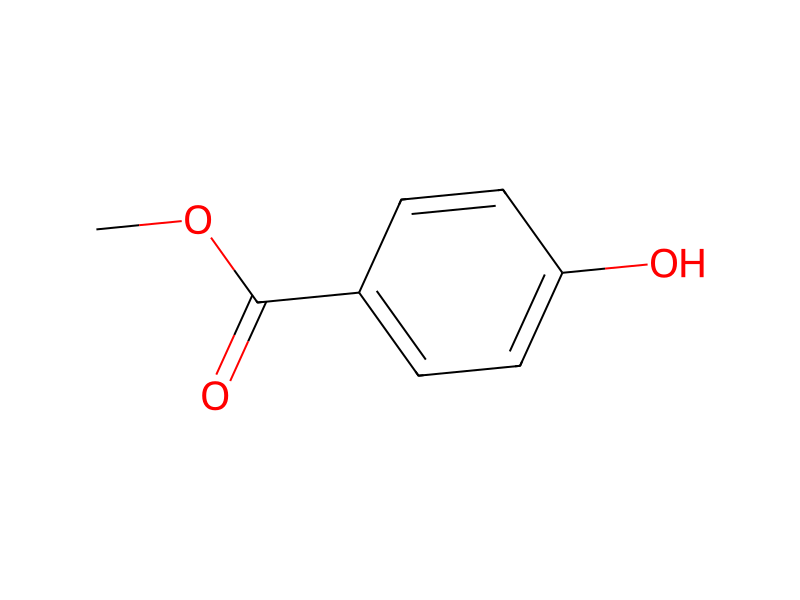
Freshly cut sodium metal (5.98 g, 0.26 mole) was gradually introduced into 150 ml of dry methanol in a 1000 ml flask equipped with a stirrer, and a reflux condenser with a drying tube. Upon complete solution of the sodium, first, 39.56 g (0.26 mole) of methyl p-hydroxybenzoate in 100 ml of methanol and later 50.0 g (0.26 mole) of methyl 5-bromovalerate were added rapidly. The reaction was allowed to reflux for 78 hours. After 78 hours of refluxing precipitated material was removed by filtration. The diester was precipitated upon pouring the solution into an ice water mixture. A clear powdery white precipitate was obtained, and filtered from the remaining solution. The precipitate was dried overnight, and weighed to obtain 58.35 g (84% yield). Methyl p-carboxyphenoxyacetate (CPA), (85% yield), and methyl p-carboxyphenoxyoctanoate (CPO) (75% yield) were prepared similarly using methyl bromoacetate, and methyl 8-bromooctanoate, respectively. The data analysis of the esters is described in Table 1. The methyl esters were then hydrolyzed to the corresponding diacids as follows: