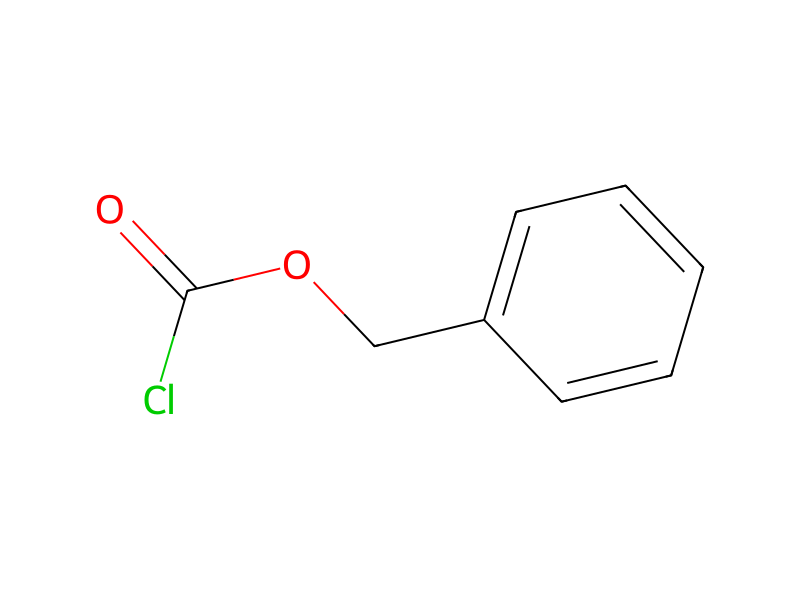
Benzyl chloroformate → (R)-3-((Benzyloxy)carbonyl)thiazolidine-4-carboxylic acid
HRID 1722659
Reaktionsgleichung

[S:1]1[CH2:5][C@@H:4]([C:6]([OH:8])=[O:7])[NH:3][CH2:2]1.[OH-].[Na+].[CH2:11]([O:18][C:19](Cl)=[O:20])[C:12]1[CH:17]=[CH:16][CH:15]=[CH:14][CH:13]=1>>[CH2:11]([O:18][C:19]([N:3]1[C@H:4]([C:6]([OH:8])=[O:7])[CH2:5][S:1][CH2:2]1)=[O:20])[C:12]1[CH:17]=[CH:16][CH:15]=[CH:14][CH:13]=1Komponenten
4



Versuchsvorschrift
To a solution of 2.66 g of (R)-(-)-thiazolidine-4-carboxylic acid in 10 ml of a 2N-aqueous sodium hydroxide solution were added 4.1 g of benzyloxycarbonyl chloride and 15 ml of a 2N-aqueous sodium hydroxide solution with stirring under ice-cooling at the same time, and then the mixture was stirred for 2 hours at room temperature. The reaction mixture was washed with diethyl ether. The reaction mixture was then acidified by adding hydrochloric acid under ice-cooling. The mixture was allowed to stand for 30 minutes, and then the mixture was extracted with ethyl acetate. The organic layer was washed with a saturated sodium chloride aqueous solution, dried over anhydrous sodium sulfate, and evaporated under reduced pressure to obtain 4.14 g of (R)-(-)-3-benzyloxycarbonylthiazolidine-4-carboxylic acid as a colorless clear viscous oil. The oily substance was allowed to stand under cooling to form a solid, and the solid was recrystallized from diethyl ether-petroleum ether to obtain a pure (R)-(-)-3-benzyloxycarbonylthiazolidine-4-carboxylic acid.