Pyridine → 3,5-Di-t-butyl-4-hydroxy-benzylpyridinium chloride
Reaktionsgleichung

[C:1]([C:5]1[CH:6]=[C:7]([CH:10]=[C:11]([C:14]([CH3:17])([CH3:16])[CH3:15])[C:12]=1[OH:13])[CH2:8][Cl:9])([CH3:4])([CH3:3])[CH3:2].[N:18]1[CH:23]=[CH:22][CH:21]=[CH:20][CH:19]=1>CC(C)=O>[Cl-:9].[C:1]([C:5]1[CH:6]=[C:7]([CH:10]=[C:11]([C:14]([CH3:17])([CH3:16])[CH3:15])[C:12]=1[OH:13])[CH2:8][N+:18]1[CH:23]=[CH:22][CH:21]=[CH:20][CH:19]=1)([CH3:4])([CH3:3])[CH3:2]Komponenten
4
Edukt 2

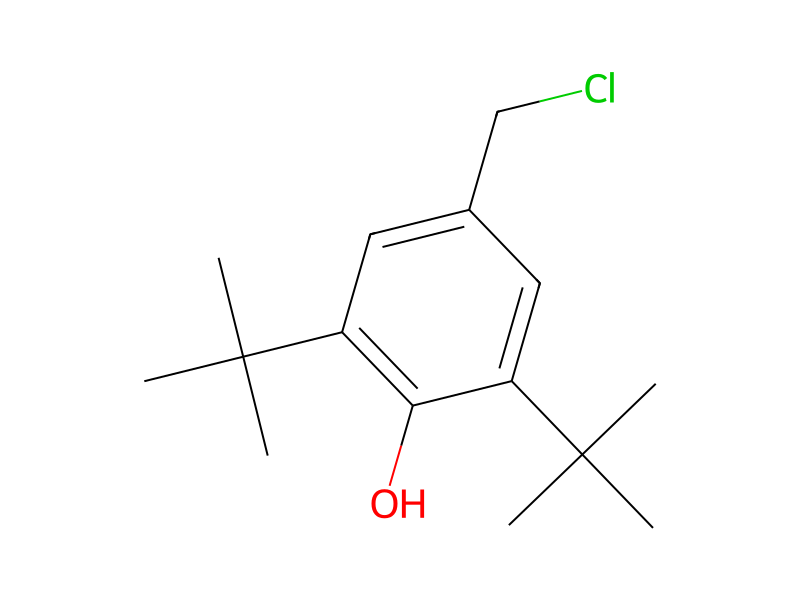
Produkt 1

Reagenzien, Katalysatoren, Lösungsmittel 1

Versuchsvorschrift
1271/2 Grams of 3,5-di-tert.butyl-4-hydroxybenzyl chloride was added dropwise, in 40 minutes, to a solution of 44.0 grams of pyridine in 500 milliliters of acetone. The mixture was stirred briefly and was then filtered, yielding 159 grams of 3,5-di-tert.butyl-4-hydroxybenzyl-pyridinium chloride, with a melting point of 239°-240° C. (with decomposition). This represents 95 percent of theory.