2-Amino-4-methylpyridine → 6-(3,7-dimethylimidazo[1,2-a]pyridin-2-yl)-2-methyl-3-oxo-3,4-dihydro-2H-1,4-benzoxazine
Reaktionsgleichung

Br[CH:2]([CH3:17])[C:3]([C:5]1[CH:6]=[CH:7][C:8]2[O:13][CH:12]([CH3:14])[C:11](=[O:15])[NH:10][C:9]=2[CH:16]=1)=O.[NH2:18][C:19]1[CH:24]=[C:23]([CH3:25])[CH:22]=[CH:21][N:20]=1>C(#N)C>[CH3:17][C:2]1[N:20]2[CH:21]=[CH:22][C:23]([CH3:25])=[CH:24][C:19]2=[N:18][C:3]=1[C:5]1[CH:6]=[CH:7][C:8]2[O:13][CH:12]([CH3:14])[C:11](=[O:15])[NH:10][C:9]=2[CH:16]=1Komponenten
4
Edukt 2
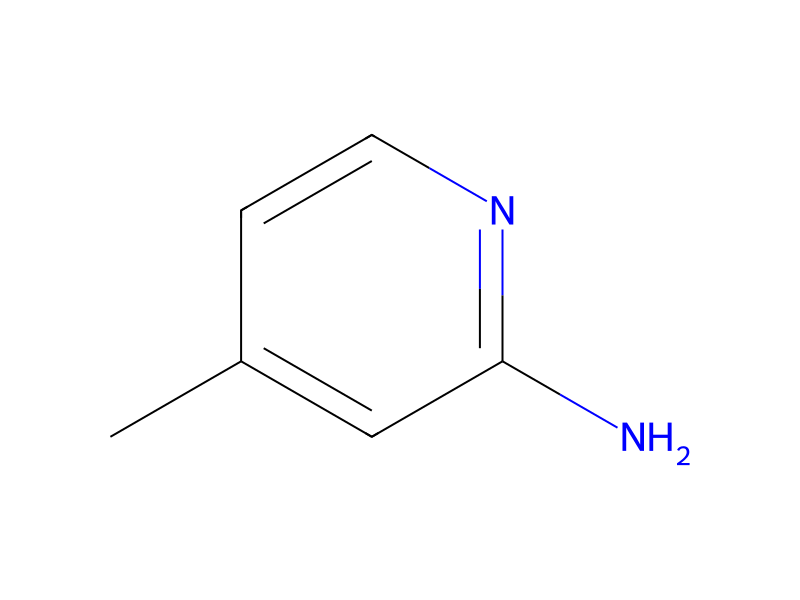

Produkt 1

Reagenzien, Katalysatoren, Lösungsmittel 1

Versuchsvorschrift
A solution of 6-(2-bromopropionyl)-2-methyl-3-oxo-3,4-dihydro-2H-1,4-benzoxazine (1.5 g) and 2-amino-4-picoline (1.6 g) in acetonitrile (60 ml) was refluxed for 2.5 hours and the reaction mixture was evaporated under reduced pressure. A mixture of ethyl acetate and 5% hydrochloric acid was added to the residue and the resultant mixture was stirred at ambient temperature for 30 minutes. The precipitate was collected by filtration and suspended in water. The mixture was adjusted to pH 7.5 with 20% aqueous potassium carbonate. The resultant mixture was extracted with chloroform and the extract was washed with brine and dried over magnesium sulfate. The solvent was removed in vacuo to afford a crystalline residue, which was recrystallized from a mixture of ethyl acetate and tetrahydrofuran to give 6-(3,7-dimethylimidazo[1,2-a]pyridin-2-yl)-2-methyl-3-oxo-3,4-dihydro-2H-1,4-benzoxazine (0.7 g).