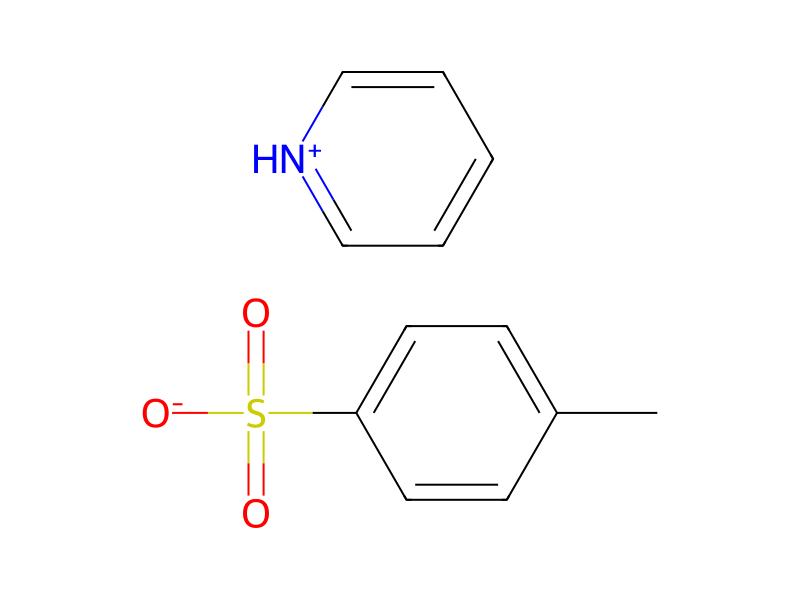
Benzenesulfonic acid, 4-methyl-, compd. with pyridine (1:1) → 7-Fluoro-2-(2-hydroxy-1,1-dimethylethyl)-5-methyl-6-phenyl-1,3-benzoxazole-4-carbonitrile
Reaktionsgleichung

[C:1]([C:3]1[C:4]([CH3:25])=[C:5]([C:19]2[CH:24]=[CH:23][CH:22]=[CH:21][CH:20]=2)[C:6]([F:18])=[C:7]([OH:17])[C:8]=1[NH:9][C:10](=O)[C:11]([CH3:15])([CH3:14])[CH2:12][OH:13])#[N:2].C1(C)C=CC(S([O-])(=O)=O)=CC=1.[NH+]1C=CC=CC=1>C1(C)C=CC=CC=1.C(OCC)(=O)C>[F:18][C:6]1[C:5]([C:19]2[CH:24]=[CH:23][CH:22]=[CH:21][CH:20]=2)=[C:4]([CH3:25])[C:3]([C:1]#[N:2])=[C:8]2[C:7]=1[O:17][C:10]([C:11]([CH3:14])([CH3:15])[CH2:12][OH:13])=[N:9]2Komponenten
5