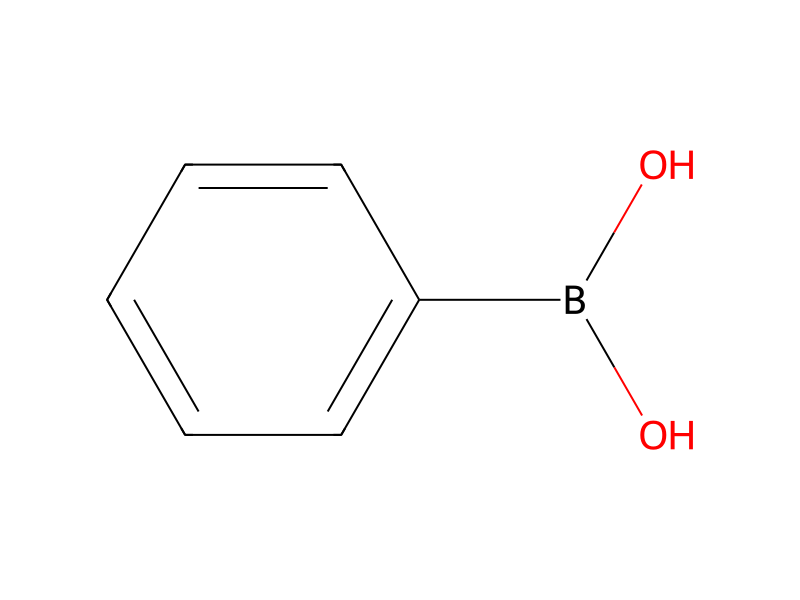
[C:1]1(B(O)O)[CH:6]=[CH:5][CH:4]=[CH:3][CH:2]=1.P([O-])([O-])([O-])=O.[K+].[K+].[K+].Br[C:19]1[C:20]([F:32])=[C:21]2[O:25][C:24]([CH3:26])=[N:23][C:22]2=[C:27]([C:30]#[N:31])[C:28]=1[CH3:29]>O1CCOCC1>[F:32][C:20]1[C:19]([C:1]2[CH:6]=[CH:5][CH:4]=[CH:3][CH:2]=2)=[C:28]([CH3:29])[C:27]([C:30]#[N:31])=[C:22]2[C:21]=1[O:25][C:24]([CH3:26])=[N:23]2Phenylboronic acid (1.30 g, 10.63 mmol), tetrakistriphenylphosphine palladium(0) (473 mg, 0.41 mmol) and tripotassium phosphate (4.51 g, 21.2 mmol) were added to a 1,4-dioxane (80 ml) solution of 6-bromo-7-fluoro-2,5-dimethyl-1,3-benzoxazole-4-carbonitrile (I-101) (2.2 g, 8.18 mmol), followed by heating under reflux for 3 hours under nitrogen atmosphere. After cooling, the reaction liquid was filtered, the solvent was evaporated away from the filtrate under reduced pressure. The resulting residue was subjected to silica gel column chromatography, and eluted with n-hexane/ethyl acetate (5:1, v/v→4:1, v/v) to obtain a main product. This was washed with isopropyl ether and then collected by filtration to obtain the entitled compound (985 mg, 45%) as a colorless solid.