Reaktionsgleichung

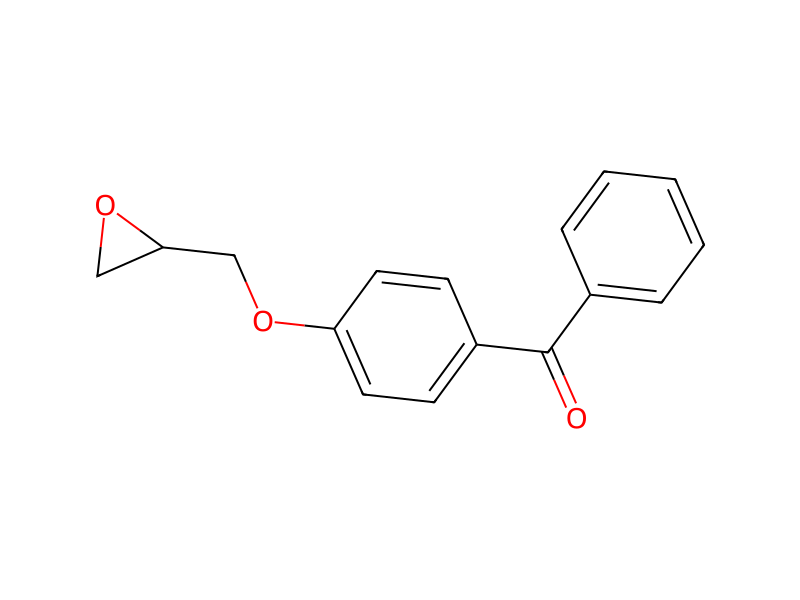
[OH:1][C:2]1[CH:15]=[CH:14][C:5]([C:6]([C:8]2[CH:13]=[CH:12][CH:11]=[CH:10][CH:9]=2)=[O:7])=[CH:4][CH:3]=1.[CH2:16]([CH:18]1[O:20][CH2:19]1)Cl.[OH-].[Na+]>>[CH2:16]([O:1][C:2]1[CH:3]=[CH:4][C:5]([C:6]([C:8]2[CH:13]=[CH:12][CH:11]=[CH:10][CH:9]=2)=[O:7])=[CH:14][CH:15]=1)[CH:18]1[O:20][CH2:19]1Komponenten
4



Reaktionsbedingungen
- Temperatur
- 100 °C
Versuchsvorschrift
1 g of 4-hydroxy benzophenone and 4.668 g of epichlorohydrin (0.025 mol) were dissolved, 20.5 mg of sodium hydroxide was added, and the reaction system was heated to 100° C. and then cooled to 95° C. Furthermore 201.4 mg of sodium hydroxide was added, and additional heating and agitation was carried out for 3 hours. The system was cooled to the room temperature, and salt was removed by filtering. The obtained filtrate was condensed under reduced pressure condition, and purified according to the silica gel chromatography to obtain 1.0 g of solid state 4-glycidyloxy benzophenone (Yield: 83%).
Aufarbeitung
- temperaturecooled to 95° C
- temperatureadditional heating
- temperatureThe system was cooled to the room temperature, and salt
- customwas removed
- filtrationby filtering
- customcondensed under reduced pressure condition
- custompurified
Quellen und Nachweise
- ORD-Eintrag
- ord-e85f38e65d7646519f71c006d78eed22
- Quelldatensatz
- uspto-grants-1994_08
- Patentnummer
- US05342610
Verknüpfte Notizen
Wird geladen…