Reaktionsgleichung

C(O[C:4]1[C:5](=[O:20])[C:6](=[O:19])[C:7]=1[NH:8][C:9]1[CH:14]=[CH:13][C:12]([N+:15]([O-:17])=[O:16])=[CH:11][C:10]=1[OH:18])C.[Br:21][C:22]1[CH:28]=[CH:27][CH:26]=[CH:25][C:23]=1[NH2:24].C(OC(=O)C)C>CS(C)=O>[Br:21][C:22]1[CH:28]=[CH:27][CH:26]=[CH:25][C:23]=1[NH:24][C:4]1[C:5](=[O:20])[C:6](=[O:19])[C:7]=1[NH:8][C:9]1[CH:14]=[CH:13][C:12]([N+:15]([O-:17])=[O:16])=[CH:11][C:10]=1[OH:18]Komponenten
5
Edukt 3

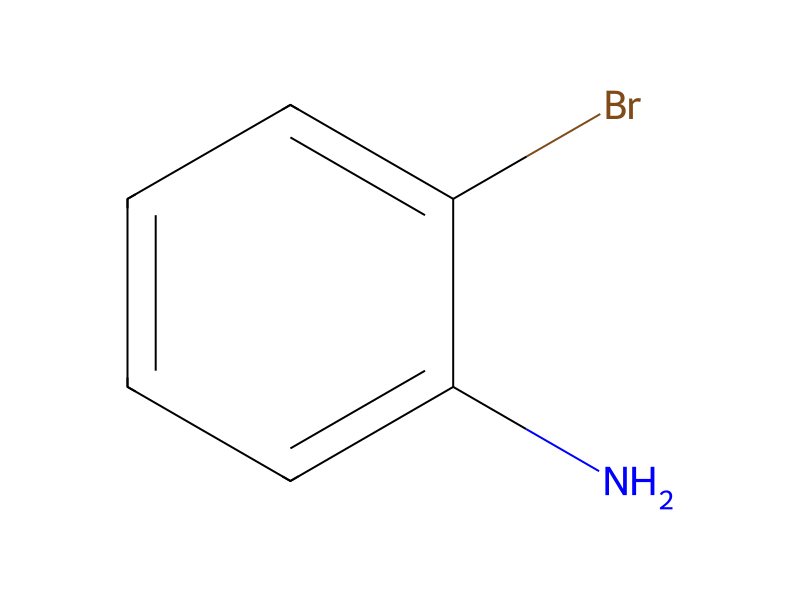

Produkt 1

Reagenzien, Katalysatoren, Lösungsmittel 1

Versuchsvorschrift
A solution of 3-ethoxy-4-(2-Hydroxy-4-nitroanilino)-3-cyclobutene-1,2-dione (0.39 g, 1.4 mmol) and 2-bromoaniline (0.36 g, 2.09 mmol) in 2 mL DMSO was heated at 110° C. for overnight. The reaction mixture was cooled to room temperature, and ethylacetate was added, and a precipitate formed. The filtrate was partitioned between ethylacetate and water. The organic layer was dried over sodium sulfate and concentrated. Titration from acetone and hexanes gave 106 mg (19%) of 3-(2-bromoanilino)-4-(2-hydroxy-4-nitroanilino)-3-cyclobutene-1,2-dione. LCMS(H+) 404
Aufarbeitung
- customa precipitate formed
- customThe filtrate was partitioned between ethylacetate and water
- dry with materialThe organic layer was dried over sodium sulfate
- concentrationconcentrated
Quellen und Nachweise
- ORD-Eintrag
- ord-d51b72e7d92f42fca638e17382a962f7
- Quelldatensatz
- uspto-grants-2006_03
- Patentnummer
- US07008962B2
Verknüpfte Notizen
Wird geladen…