Reaktionsgleichung

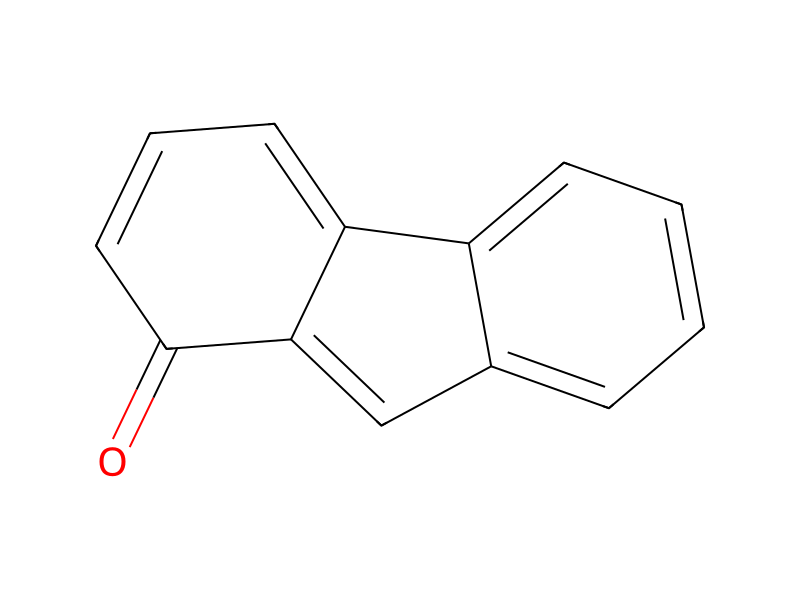
[CH:1]1[C:13]2[C:12](=O)[C:11]3[C:6](=[CH:7][CH:8]=[CH:9][CH:10]=3)[C:5]=2[C:4](C(Cl)=O)=[CH:3][CH:2]=1.S(C1C=CC(S)=CC=1)C1C=CC(S)=CC=1.C(N(CC)CC)C.[O:40]1CCCC1>>[C:1]1(=[O:40])[C:13]2[C:5]([C:6]3[C:11]([CH:12]=2)=[CH:10][CH:9]=[CH:8][CH:7]=3)=[CH:4][CH:3]=[CH:2]1Komponenten




Versuchsvorschrift
A 10.0 g of 9-fluorenone-4-carbonyl chloride (0.04 mole, obtained from Aldrich Chemicals Co, Milwaukee, Wis. 53201, USA) and 100 ml of tetrahydrofuran (obtained from Aldrich) were added to a 250 ml, 3-neck round bottom flask equipped with a reflux condenser and a mechanical stirrer. The solution was stirred for about ½ hour, then 5.16 g of 4,4′-thiobisbenzenethiol (0.02 mole, obtained from Aldrich) in 50 ml of tetrahydrofuran were added, followed by the addition of 4.17 g of triethylamine (0.04 mole, obtained from Aldrich). The solution was refluxed for 6 hours and filtered hot to remove triethylamine hydrochloride salt byproduct. The filtrate was evaporated to dryness to obtain the crude product. The crude product was recrystallized from tetrahydrofuran/methanol with activated charcoal. The product was dried at 60° C. vacuum oven for 6 hours to yield a first dimeric fluorenone derivative, which was a yellow solid (6.85 g, 50% yield).
Aufarbeitung
- customequipped with a reflux condenser and a mechanical stirrer
- temperatureThe solution was refluxed for 6 hours
- filtrationfiltered hot
- customto remove triethylamine hydrochloride salt byproduct
- customThe filtrate was evaporated to dryness
- customto obtain the crude product
- customThe crude product was recrystallized from tetrahydrofuran/methanol with activated charcoal
- customThe product was dried at 60° C. vacuum oven for 6 hours
Quellen und Nachweise
- ORD-Eintrag
- ord-e8f4c99dce164634823dca4f396d7101
- Quelldatensatz
- uspto-grants-2006_03
- Patentnummer
- US07011917B2
Verknüpfte Notizen
Wird geladen…