Reaktionsgleichung

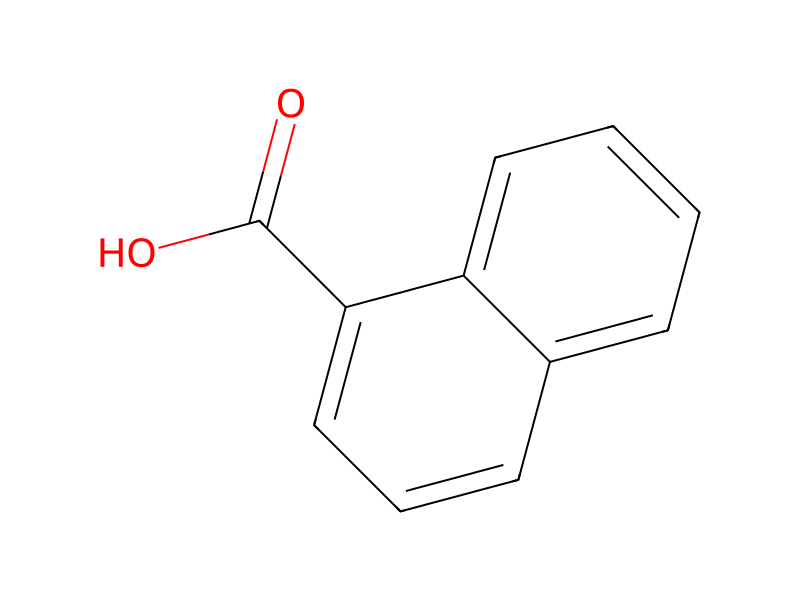
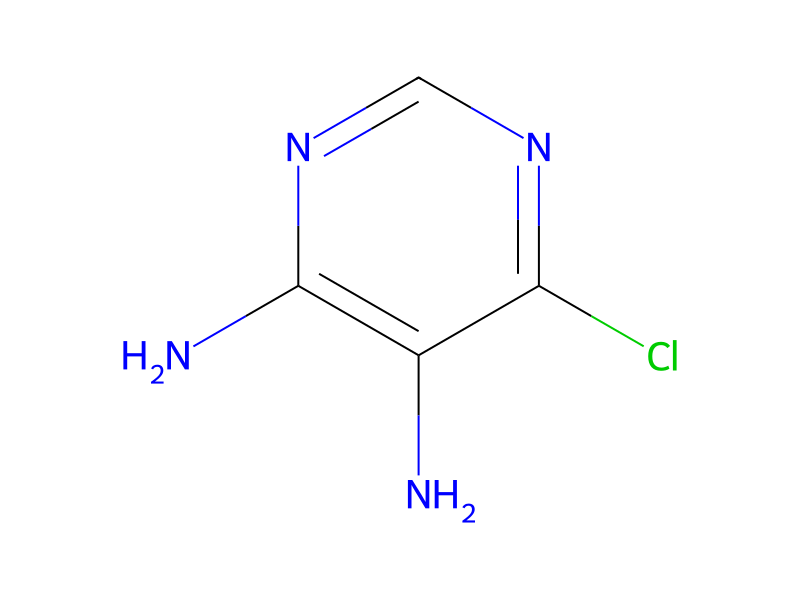
[Cl:1][C:2]1[N:7]=[CH:6][N:5]=[C:4]([NH2:8])[C:3]=1[NH2:9].[C:10]1([C:20](O)=O)[C:19]2[C:14](=[CH:15][CH:16]=[CH:17][CH:18]=2)[CH:13]=[CH:12][CH:11]=1.P(Cl)(Cl)(Cl)=O>>[Cl:1][C:2]1[N:7]=[CH:6][N:5]=[C:4]2[C:3]=1[N:9]=[C:20]([C:10]1[C:19]3[C:14](=[CH:15][CH:16]=[CH:17][CH:18]=3)[CH:13]=[CH:12][CH:11]=1)[NH:8]2Komponenten
4


Reaktionsbedingungen
- Temperatur
- 110 °C
Versuchsvorschrift
A mixture of 6-chloro-4,5-diaminopyrimidine (519 mg, 0.00359 mol) and 1-naphthalenecarboxylic acid (618 mg, 0.00359 mol) in phosphoryl chloride (2.0 mL, 0.021 mol) was heated at 110° C. under an atmosphere of nitrogen for 5.5 hours. The reaction was cooled and the residue was washed several times with ether. The residue was dissolved in CH2Cl2 and aqueous NaHCO3. The layers were separated and the aqueous was extracted with EtOAc (1×) and CH2Cl2 (1×). The combined organics were washed with saturated aqueous NaHCO3, brine, dried (Na2SO4), filtered, and collected in vacuo to obtain 810 mg (80%) of an orange solid. LC/MS: Rt=1.68 min, ES+ 261 (FA standard).
Aufarbeitung
- temperatureThe reaction was cooled
- washthe residue was washed several times with ether
- dissolutionThe residue was dissolved in CH2Cl2
- customThe layers were separated
- extractionthe aqueous was extracted with EtOAc (1×) and CH2Cl2 (1×)
- washThe combined organics were washed with saturated aqueous NaHCO3, brine
- dry with materialdried (Na2SO4)
- filtrationfiltered
- customcollected in vacuo
Quellen und Nachweise
- ORD-Eintrag
- ord-949edd3597534b8399f6685b078db29c
- Quelldatensatz
- uspto-grants-2015_10
- Patentnummer
- US09150525B2
Verknüpfte Notizen
Wird geladen…