Ethylenediamine → 6,11-Dibromo-1,4-diazatriphenylene
Reaktionsgleichung

[Br:1][C:2]1[CH:15]=[CH:14][C:13]2[C:12]3[C:7](=[CH:8][C:9]([Br:16])=[CH:10][CH:11]=3)[C:6](=O)[C:5](=O)[C:4]=2[CH:3]=1.[CH2:19]([NH2:22])[CH2:20][NH2:21]>C(O)C>[Br:1][C:2]1[CH:15]=[CH:14][C:13]2[C:4]([CH:3]=1)=[C:5]1[C:6](=[C:7]3[CH:8]=[C:9]([Br:16])[CH:10]=[CH:11][C:12]=23)[N:22]=[CH:19][CH:20]=[N:21]1Komponenten
4
Edukt 2
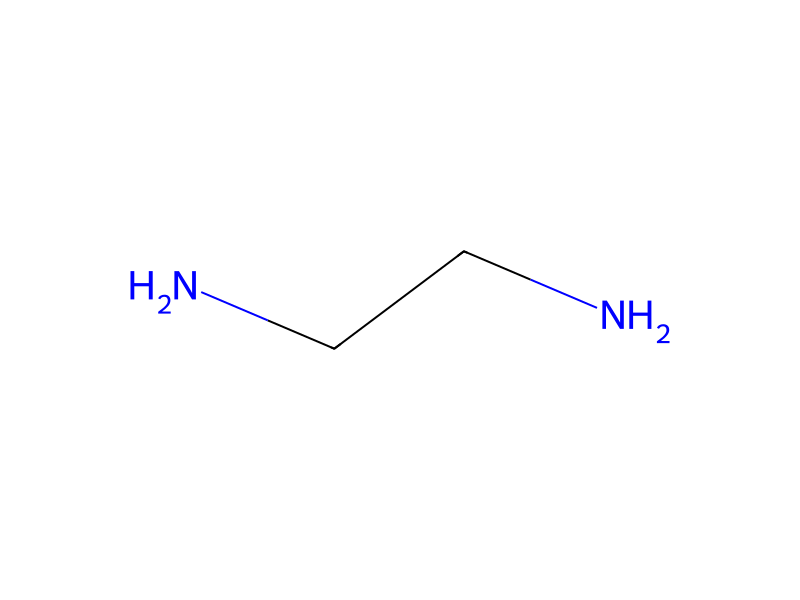

Produkt 1

Reagenzien, Katalysatoren, Lösungsmittel 1

Reaktionsbedingungen
- Temperatur
- 85 °C
Versuchsvorschrift
A mixture of 2,7-dibromophenanthrene-9,10-dione (1.0 g, 2.7 mmol), ethylenediamine (1.8 mL, 26.9 mmol) and ethanol (20 mL) was heated to 85° C. After 3 hours, the reaction was cooled to room temperature and the solids were filtered and thoroughly washed methanol to yield 6,11-dibromodibenzo[f,h]quinoxaline (360 mg, 34%).
Aufarbeitung
- temperaturethe reaction was cooled to room temperature
- filtrationthe solids were filtered
Quellen und Nachweise
- ORD-Eintrag
- ord-28f8234463ce4f9585f15bc9a32bb97b
- Quelldatensatz
- uspto-grants-2015_10
- Patentnummer
- US09156823B2
Notizen zur Reaktion
Wird geladen…