Reaktionsgleichung

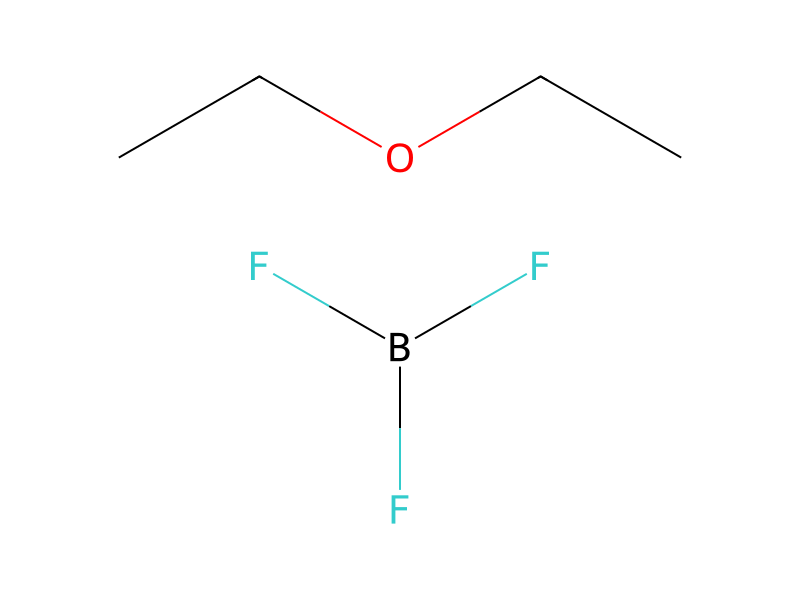
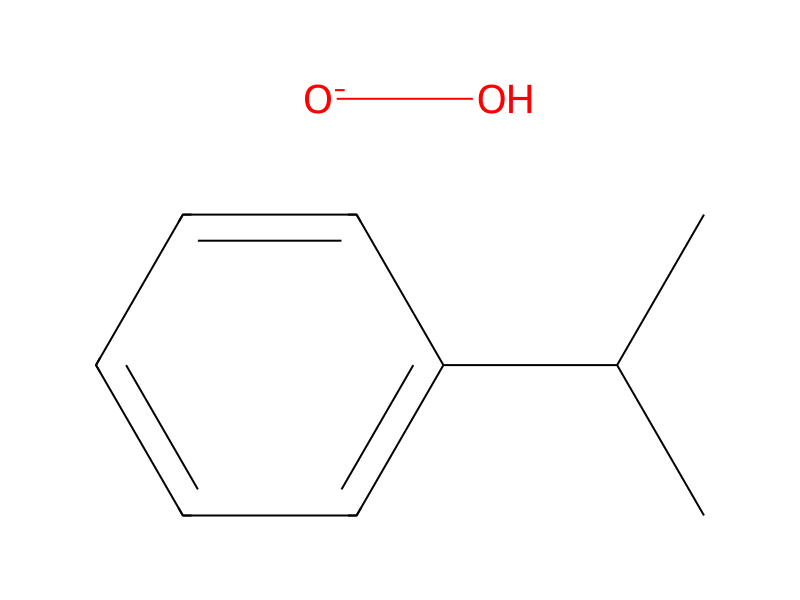
[C:1]([O:10]C)([C:4]1[CH:9]=[CH:8][CH:7]=[CH:6][CH:5]=1)([CH3:3])[CH3:2].B(F)(F)F.CC[O:18]CC.[O-]O.[C:23]1([CH:29]([CH3:31])[CH3:30])[CH:28]=[CH:27][CH:26]=[CH:25][CH:24]=1>>[C:29]([O:18][O:10][C:1]([C:4]1[CH:5]=[CH:6][CH:7]=[CH:8][CH:9]=1)([CH3:2])[CH3:3])([C:23]1[CH:28]=[CH:27][CH:26]=[CH:25][CH:24]=1)([CH3:31])[CH3:30]Komponenten
4


Reaktionsbedingungen
- Temperatur
- 60 °C
Versuchsvorschrift
There are loaded into a 100 ml glass flask, 30 grams of methyl cumyl ether (0.2 moles), 0.1 ml of boron trifluoride diethyl etherate and 9 grams of technical cumene hydroperoxide (0.05 moles) having the same composition as that used in Example 1. The mixture is heated to 60° C. with stirring and maintained at a pressure of 200 mmHg. After 30 minutes the conversion of the cumene hydroperoxide is 100% with a yield of 99.8% of dicumyl peroxide.
Aufarbeitung
- customThere are loaded into a 100 ml glass flask
- temperaturemaintained at a pressure of 200 mmHg
Quellen und Nachweise
- ORD-Eintrag
- ord-d44841cc6a594b178f67f248c9e41fbc
- Quelldatensatz
- uspto-grants-1983_02
- Patentnummer
- US04374279
Verknüpfte Notizen
Wird geladen…