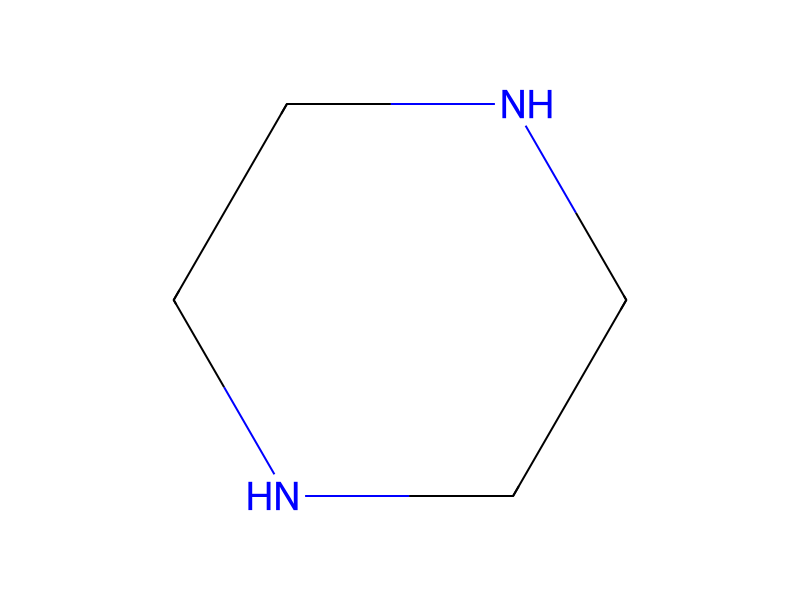
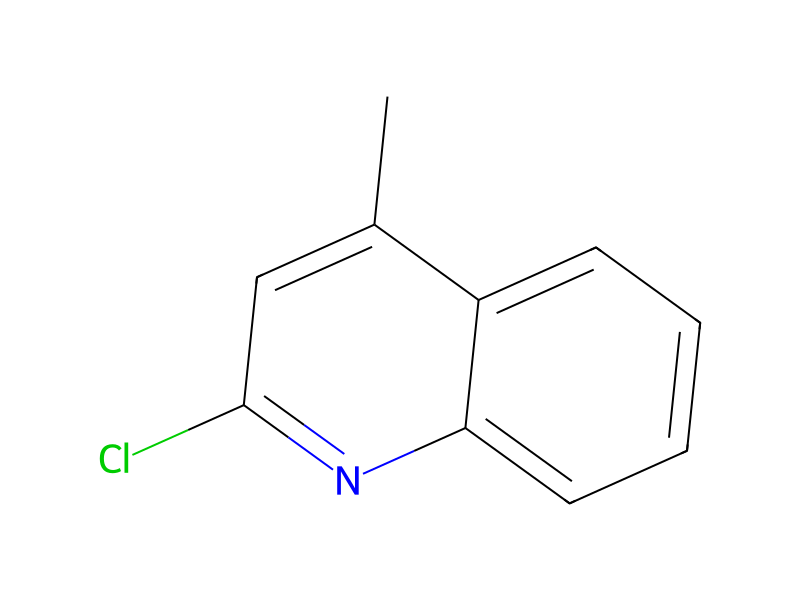
To a solution of 2-chloro-4-methylquinoline (2 g, 11 mmol) in N,N-dimethylformamide (40 ml) was added piperazine (4.86 g, 56.4 mmol, 5 eq) and potassium carbonate (2.34 g, 16.8 mmol, 1.5 eq). The mixture was stirred overnight at 140° C., quenched by the addition of water (200 ml), and extracted with ethyl acetate (3×100 ml). The organic layers were combined and washed with saturated aqueous sodium chloride (200 ml). The ethyl acetate solution was dried over anhydrous sodium sulfate, filtered, and concentrated under vacuum. The crude material was purified by silica gel chromatography using 1-10% methanol in dichloromethane to elute. The product-containing fractions were combined and concentrated to afford 4-methyl-2-(piperazin-1-yl)quinoline as colorless oil (2.2 g, 86%); (ES, m/z) [M+H]+ 228; 1H NMR (300 MHz, CDCl3): δ 7.70-7.78 (m, 2H), 7.50-7.55 (t, J=7.5 Hz, 1H), 7.22-7.27 (t, J=6.9 Hz, 1H), 6.83 (s, 2H), 3.70-3.73 (t, J=4.8 Hz, 1H), 3.00-3.03 (t, J=5.1 Hz, 1H), 2.59 (s, 3H).