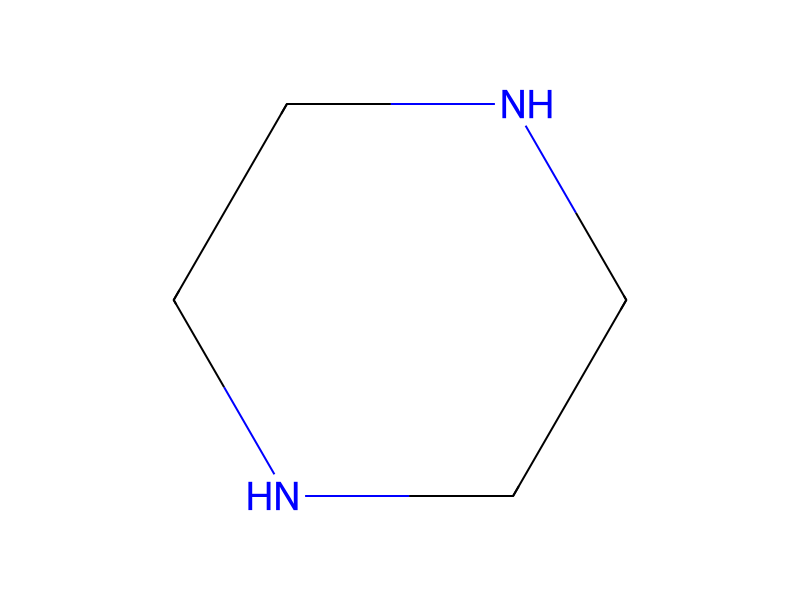
Br[CH2:2][C:3]1[S:4][C:5]2[CH:11]=[CH:10][C:9]([F:12])=[CH:8][C:6]=2[N:7]=1.C(=O)([O-])[O-].[K+].[K+].[NH:19]1[CH2:24][CH2:23][NH:22][CH2:21][CH2:20]1>C(#N)C>[F:12][C:9]1[CH:10]=[CH:11][C:5]2[S:4][C:3]([CH2:2][N:19]3[CH2:24][CH2:23][NH:22][CH2:21][CH2:20]3)=[N:7][C:6]=2[CH:8]=1A mixture of 2-(bromomethyl)-5-fluoro-1,3-benzothiazole (150 mg, 0.61 mmol), potassium carbonate (253 mg, 1.83 mmol) and piperazine (263 mg, 3.05 mmol) in acetonitrile (30 ml) was heated at reflux for 4.5 hours with stirring and was then concentrated under vacuum. The residue was dissolved in dichloromethane (100 ml), washed with brine (3×50 mL), dried over anhydrous sodium sulfate, filtered and concentrated under vacuum to afford 5-fluoro-2-(piperazin-1-ylmethyl)-1,3-benzothiazole as a yellow crude solid (130 mg). (ES, m/z): [M+H]+ 252.1; 1H NMR (400 MHz, CDCl3): δ 7.81 (dd, J=8.8, 5.2 Hz, 1H), 7.70 (dd, J=9.6, 2.4 Hz, 1H), 7.16-7.11 (m, 1H), 3.93 (s, 2H), 2.97-2.93 (m, 4H), 2.64-2.63 (m, 4H), 1.98 (s, 1H).