Reaktionsgleichung
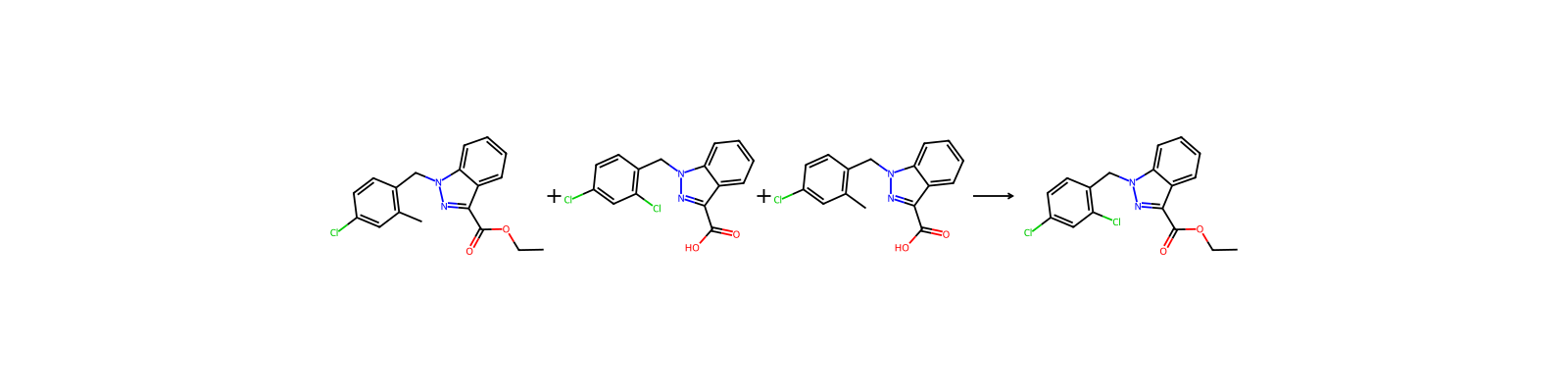
[Cl:1][C:2]1[CH:22]=[CH:21][C:5]([CH2:6][N:7]2[C:15]3[C:10](=[CH:11][CH:12]=[CH:13][CH:14]=3)[C:9]([C:16]([O:18][CH2:19][CH3:20])=[O:17])=[N:8]2)=[C:4](C)[CH:3]=1.[Cl:24]C1C=C(Cl)C=CC=1CN1C2C(=CC=CC=2)C(C(O)=O)=N1.ClC1C=CC(CN2C3C(=CC=CC=3)C(C(O)=O)=N2)=C(C)C=1>>[Cl:24][C:4]1[CH:3]=[C:2]([Cl:1])[CH:22]=[CH:21][C:5]=1[CH2:6][N:7]1[C:15]2[C:10](=[CH:11][CH:12]=[CH:13][CH:14]=2)[C:9]([C:16]([O:18][CH2:19][CH3:20])=[O:17])=[N:8]1Komponenten
4


Versuchsvorschrift
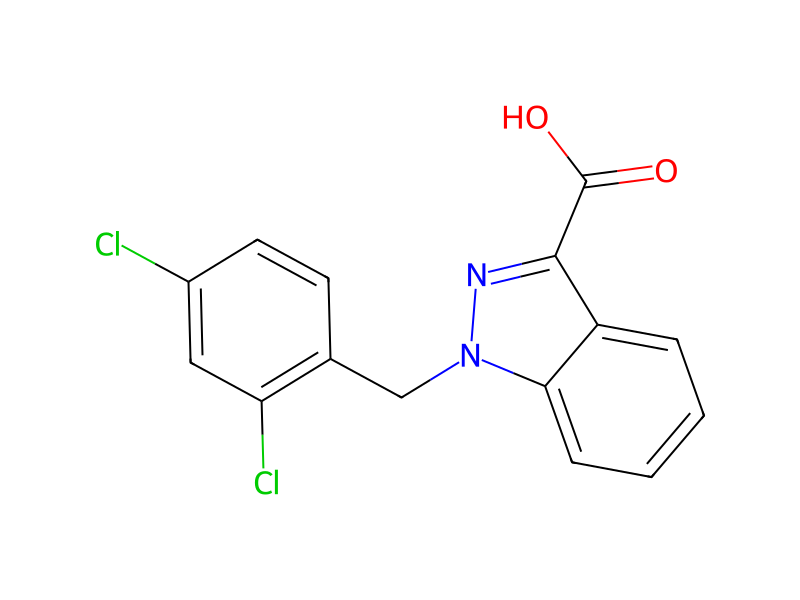
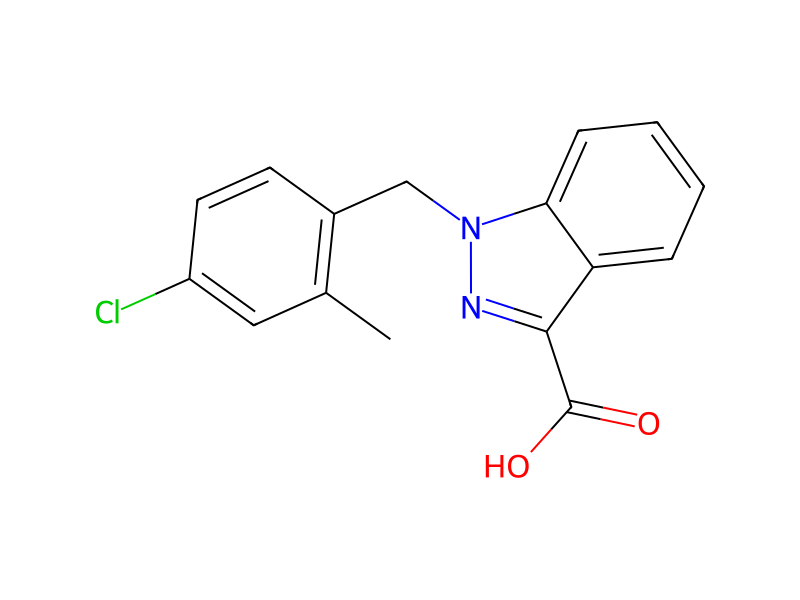
The product was obtained using the method described for the preparation of compound 10a, but using as reagent 1-(2,4-dichlorobenzyl)-1H-indazole-3-carboxylic acid, prepared as described in J. Med. Chem. (1976) 19, 778-783, (0.4 mol) instead of 1-(4-chloro-2-methylbenzyl)-1H-indazole-3-carboxylic acid.
Aufarbeitung
- customThe product was obtained
- customprepared
Quellen und Nachweise
- ORD-Eintrag
- ord-eb1cbbe82b0c4caf90a9a103ec83b064
- Quelldatensatz
- uspto-grants-2016_02
- Patentnummer
- US09255073B2
Verknüpfte Notizen
Wird geladen…