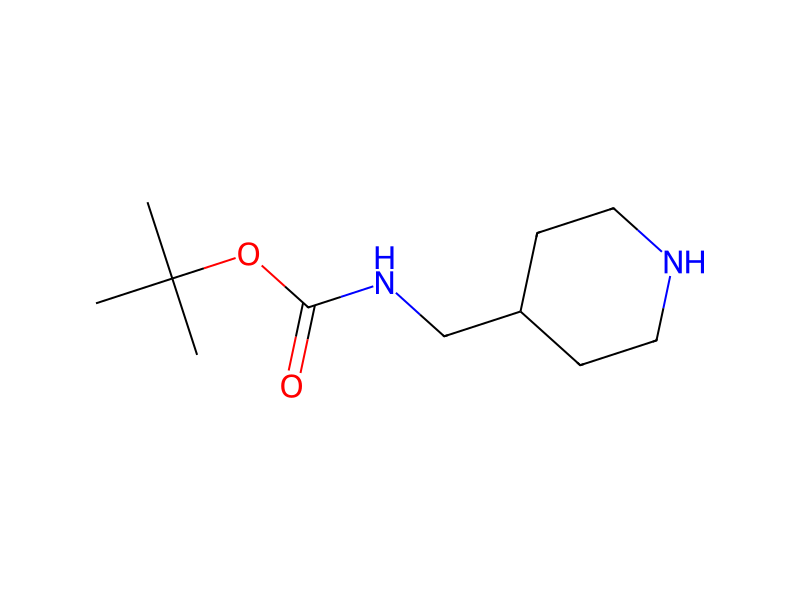
Cl[C:2]1[CH:11]=[C:10]2[C:5]([CH:6]=[CH:7][CH:8]=[N:9]2)=[CH:4][C:3]=1[N+:12]([O-:14])=[O:13].C(=O)([O-])[O-].[K+].[K+].[C:21]([O:25][C:26](=[O:35])[NH:27][CH2:28][CH:29]1[CH2:34][CH2:33][NH:32][CH2:31][CH2:30]1)([CH3:24])([CH3:23])[CH3:22]>CN(C)C=O>[C:21]([O:25][C:26](=[O:35])[NH:27][CH2:28][CH:29]1[CH2:30][CH2:31][N:32]([C:2]2[CH:11]=[C:10]3[C:5]([CH:6]=[CH:7][CH:8]=[N:9]3)=[CH:4][C:3]=2[N+:12]([O-:14])=[O:13])[CH2:33][CH2:34]1)([CH3:24])([CH3:22])[CH3:23]To a solution of 7-chloro-6-nitro-quinoline (974 mg, 4.67 mmol) in N,N-dimethylformamide (25 mL) were added potassium carbonate (1.93 g, 14.01 mmol) and piperidin-4-ylmethyl-carbamic acid tert-butyl ester (1.00 g, 4.67 mmol) and the resulting mixture was heated at 100° C. overnight. The reaction mixture was cooled and partitioned between water (500 mL) and ethyl acetate (300 mL). The organic layer was separated, washed twice with water (500 mL), dried over anhydrous sodium sulfate, filtered and evaporated under reduced pressure. The crude residue was purified twice by flash chromatography to afford 415 mg of [1-(6-nitro-quinolin-7-yl)-piperidin-4-ylmethyl]-carbamic acid tert-butyl ester as an orange solid.