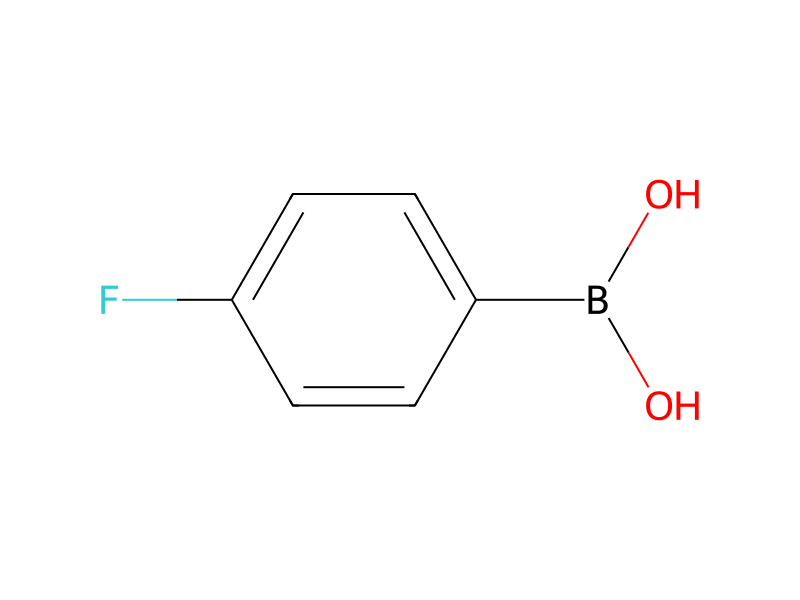
To a stirred solution of (4-fluorophenyl)boronic acid (10 g, 60.9 mmol) in toluene (70 mL) and ethanol (200 mL) was added 2-bromothiazole (12.7 g, 91.4 mmol), followed by Pd(PPh3)4 (3.5 g, 3.04 mmol). The reaction mixture was purged with argon for 20 min, Na2CO3 solution (2M, 100 mL, 19.39 g) added, and the reaction mixture stirred at 95° C. for 5 h. The reaction mixture was cooled to room temperature, quenched with saturated sodium bicarbonate solution (2×100 mL), and extracted with ethyl acetate (2×100 mL). The combined organic layer was washed with ice-cold water (2×100 mL) followed by brine solution, dried over sodium sulfate, filtered and concentrated under reduced pressure to obtained crude product. The crude product was purified by column chromatography (100-200 mesh silica gel) using 10% ethyl acetate in hexane to obtain 2-(4-fluorophenyl)thiazole as white solid (9.0 g, 82% yield). 1H NMR (400 MHz, DMSO): 7.98 (dd, 2H, J=6.8 & 14.0 Hz), 7.88 (d, 1H, J=4.8 Hz), 7.91 (d, 1H, J=2.8 Hz), 7.88 (d, 1H, J=4.8 Hz), 7.31 (t, 2H, J=8.8 & 17.2 Hz).