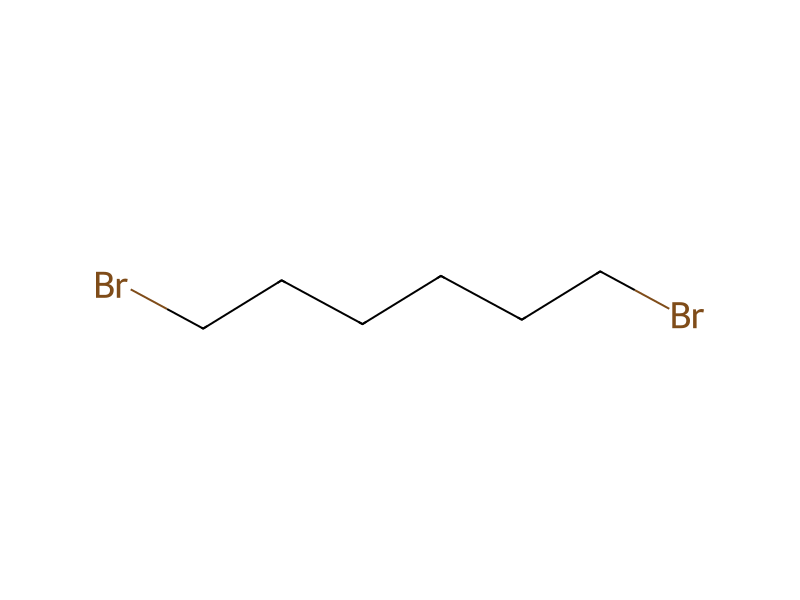
1,6-Dibromohexane → 4'-(6-Bromohexyloxy)-4-cyanobiphenyl
HRID 1783275
Reaktionsgleichung

[OH:1][C:2]1[CH:7]=[CH:6][C:5]([C:8]2[CH:13]=[CH:12][C:11]([C:14]#[N:15])=[CH:10][CH:9]=2)=[CH:4][CH:3]=1.[Br:16][CH2:17][CH2:18][CH2:19][CH2:20][CH2:21][CH2:22]Br>CC(C)=O>[Br:16][CH2:17][CH2:18][CH2:19][CH2:20][CH2:21][CH2:22][O:1][C:2]1[CH:3]=[CH:4][C:5]([C:8]2[CH:13]=[CH:12][C:11]([C:14]#[N:15])=[CH:10][CH:9]=2)=[CH:6][CH:7]=1Komponenten
4
Edukt 2

Produkt 1

Reagenzien, Katalysatoren, Lösungsmittel 1

Versuchsvorschrift
0.2 mol (39 g) of 4-hydroxy-4′-cyanobiphenyl, 2 mol (487.5 g) of 1,6-dibromohexane, 1.45 mol (200 g) of potassium carbonate anhydride and 800 ml of acetone were placed in a 2 l three-neck flask equipped with a mechanical stirrer and the mixture was reacted under reflux for 20 hours by using a water bath. The reaction mixture was cooled to ambient temperature and then undissolved salts were removed by filtration. The resulting reaction solution was concentrated to a volume of about ½ by using a rotary evaporator, to which was then added 500 ml of hexane, followed by heating with stirring. Then, the resulting solution was cooled gradually to ambient temperature and then allowed to stand in a freezing chamber to crystallize. After the crystallized product was subjected to vacuum filtration, it was washed with n-hexane and dried under reduced pressure to obtain a crude target product (yield: 85% (61.3 g)), which was then recrystallized from ethanol to obtain a purified target product 4-(6-bromohexyloxy)-4′-cyanobiphenyl (yield: 58% (41.8 g)).